












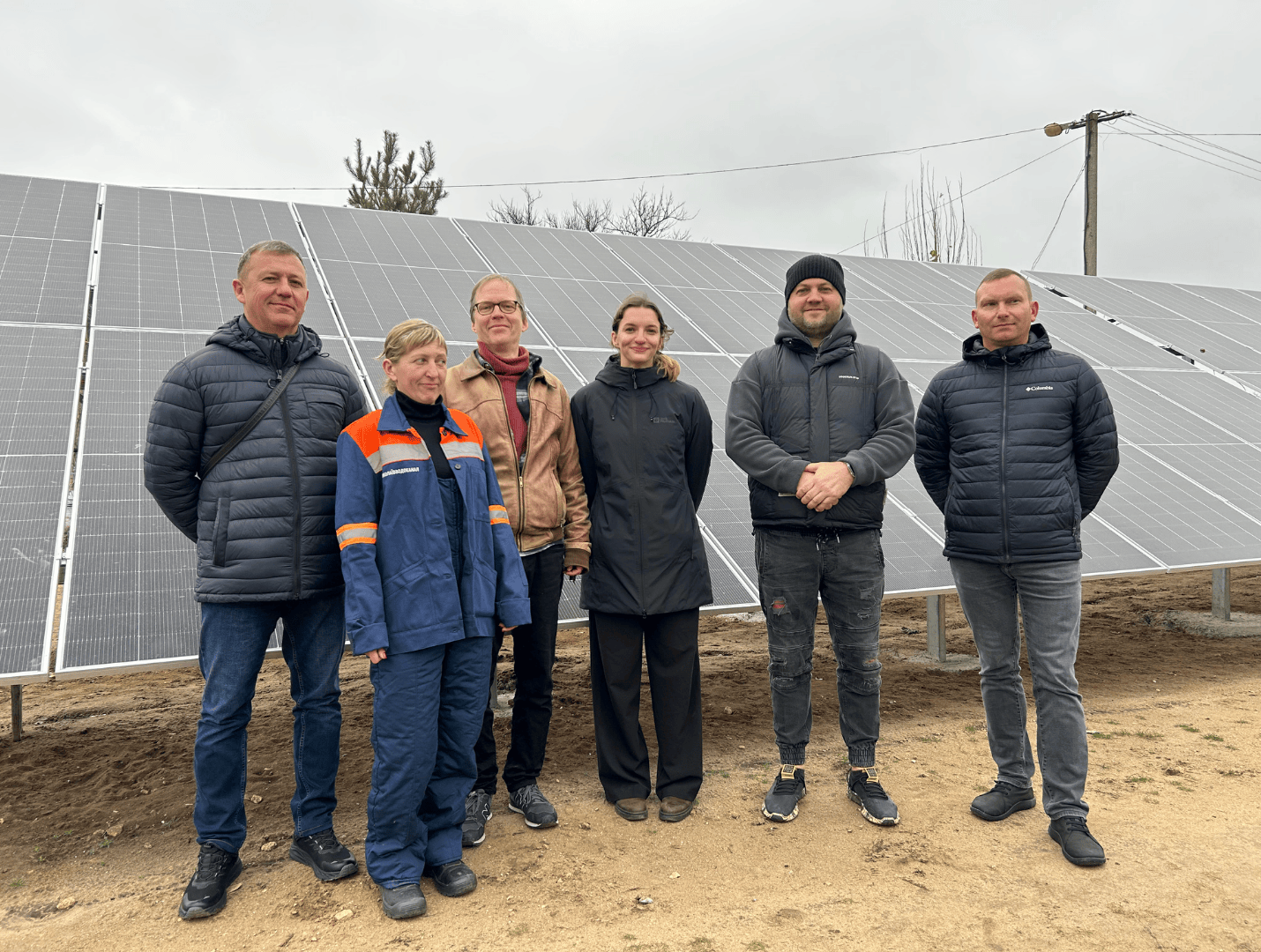
Ukraine’s energy system has been operating under constant attack, capacity shortages, and damaged infrastructure for several years. According to Volodymyr Kudrytskyi, former CEO of Ukrenergo, Ukraine is currently facing an electricity deficit of 6–7 GW. With approximately 11 GW of available generation and peak demand reaching 18 GW, power outages are unavoidable.
Critical infrastructure – including hospitals, water utilities, and emergency services—requires at least 2 GW of stable electricity supply, while an additional 1 GW is lost in transmission networks. Due to the need to reserve capacity for critical facilities, households and communities are often left with very limited access to electricity.
Rapid restoration of the centralized energy system is unrealistic. Under these conditions, decentralized renewable energy solutions are no longer an alternative but a necessity.
After 2022, Ecoclub launched the Solar Aid for Ukraine campaign, aimed at supplying critical infrastructure with solar energy so that basic services remain available even during prolonged power outages.
Without electricity, it is impossible to ensure water supply, treatment, and wastewater disposal. Access to water is a basic human need. Today, water utilities in Ukraine operate under extremely challenging conditions: security risks caused by the war, systematic attacks on the energy sector, and the impacts of climate change. In addition, water utilities are among the largest electricity consumers in municipalities.
For these reasons, water utilities are ideal candidates for decentralized solar generation combined with battery storage, which:
- reduces dependence on the centralized grid;
- enables autonomous operation during outages and blackouts;
- lowers operating costs for municipally owned utilities.
Choosing solar power with battery storage for water supply and social infrastructure facilities is a strategic decision in the context of war and climate change. Unlike diesel generators, such systems do not rely on fuel supply chains, which are often disrupted or impossible during hostilities, and can operate autonomously for extended periods. Solar power plants with energy storage ensure stable electricity supply during outages, reduce operational costs for municipalities, and are fully aligned with the objectives of the European Green Deal, including decarbonization, energy efficiency, and the development of decentralized generation. In the long term, such solutions form the foundation of climate and energy resilience for communities.
Southern regions of Ukraine, particularly Mykolaiv and Kherson oblasts – remain among the most vulnerable to disruptions in water supply. Damage and destruction of pipelines, pumping stations, and electricity networks caused by hostilities have resulted in chronic water shortages, reliance on emergency supply schemes, and increased risks of humanitarian crises.
To illustrate this approach, we present two projects recently completed by Ecoclub. Within these projects, 13 autonomous solar power plants were installed for water utilities in southern Ukraine as practical examples of decentralized energy solutions for humanitarian needs.
1) Project «Supporting Energy Security of Critical Public Infrastructure in Sumska and Mykolaivska oblasts, Ukraine»
The project was implemented by Ecoclub in partnership with the Danish Refugee Council, with financial support from the Ministry of Foreign Affairs of Denmark. Within the project, five solar power plants were constructed for water supply facilities, healthcare institutions, and social infrastructure in Mykolaiv city and oblast, ensuring continuity of essential services during power outages.
Total installed solar capacity within the project 267.63 kW of PV + 884.3 kWh of battery storage:
- Novosvitlivskyi Psychoneurological boarding institutions – 108.29 kW + 200 kWh batteries
- Primary Health Care Centre No. 2 (Mykolaiv) – 43.4 kW + 200 kWh batteries
- Municipal Centre for Comprehensive Rehabilitation of Children and Persons with Disabilities – 16 kW + 100 kWh batteries
- Mykolaivvodokanal (one water intake facility) – 38.44 kW + 200 kWh batteries
- Mykolaiv City Hospital No. 4 – 61.5 kW + 184.3 kWh batteries
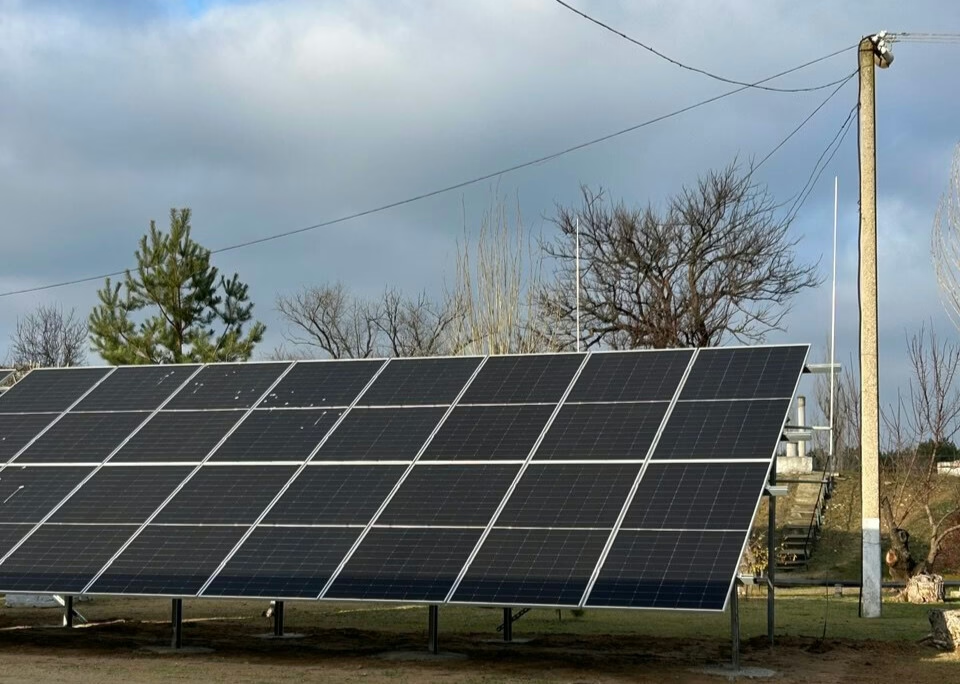
Specific importance of the water intake facility (Mykolaivvodokanal)
The selected water intake facility is one of the key elements of Mykolaiv’s water supply system, as it is the only water intake providing drinking water and serves as a reserve filling point for water tankers used in emergency and alternative water supply schemes. It serves not only permanent customers – residents of multi-storey apartment buildings, but also a large number of people in other districts of the city through centralized water delivery during disruptions to the main water supply.
The installation of a solar power plant at the water intake facility ensured uninterrupted operation of pumping equipment during prolonged power outages, including documented blackouts lasting over 20 hours. This significantly reduced the risk of a complete shutdown of water supply, which is critical for southern Ukraine, where alternative water sources are limited and pressure on water systems has increased dramatically due to the war.
Total number of beneficiaries of the project: 28,344 people.
- Novosvitlivskyi Psychoneurological boarding institutions – 304 people
- Primary Health Care Centre No. 2 – 1,151 people per day
- Municipal Rehabilitation Centre – 104 people per day
- Mykolaivvodokanal (one water intake) ≈ 25,600 people
- Mykolaiv City Hospital No. 4 – 1,185 people per day
Video about the five implemented facilities:
https://youtu.be/lyGg-ZxOqJA?si=Isxm3wqmQfC3AXeD
2) Project «Reconstruction of Water Supply Systems in Kherson Region: Immediate Measures and Sustainable Solutions»
The project was implemented by VNG International in partnership with the Association of Water Utilities in the Netherlands, the Association of Ukrainian Cities, and Ecoclub, with funding from the Ministry of Foreign Affairs of the Kingdom of the Netherlands under the Ukraine Partnership Facility (UPF) programme.
The project combined immediate recovery actions with long-term sustainable solutions to restore access to water in communities of Kherson Oblast that suffered severe damage as a result of hostilities and the destruction of the Kakhovka Hydropower Plant (Russian forces destroyed the hydropower plant in occupied territory, causing the largest man-made disaster in Ukraine’s modern history. Water from the Kakhovka Reservoir flooded dozens of settlements, and within days the reservoir had almost completely disappeared).
A key feature of the project was its focus on relatively small but strategically important water supply facilities that serve both permanent consumers and emergency and backup water supply functions. Installed solar power plants with battery storage support the operation of wells, which is critical for frontline and de-occupied territories.
The project covered three communities in Kherson Oblast.
Total number of solar power plants: 7. Total installed capacity: 120 kW of solar PV and 122.88 kWh of battery storage.
Number of beneficiaries: up to 20,000 residents of Kherson Oblast, including users of emergency water supply services. In addition to households and emergency water delivery systems, the solar power plants ensure stable operation of key social and public facilities, including schools, hospitals, and kindergartens.
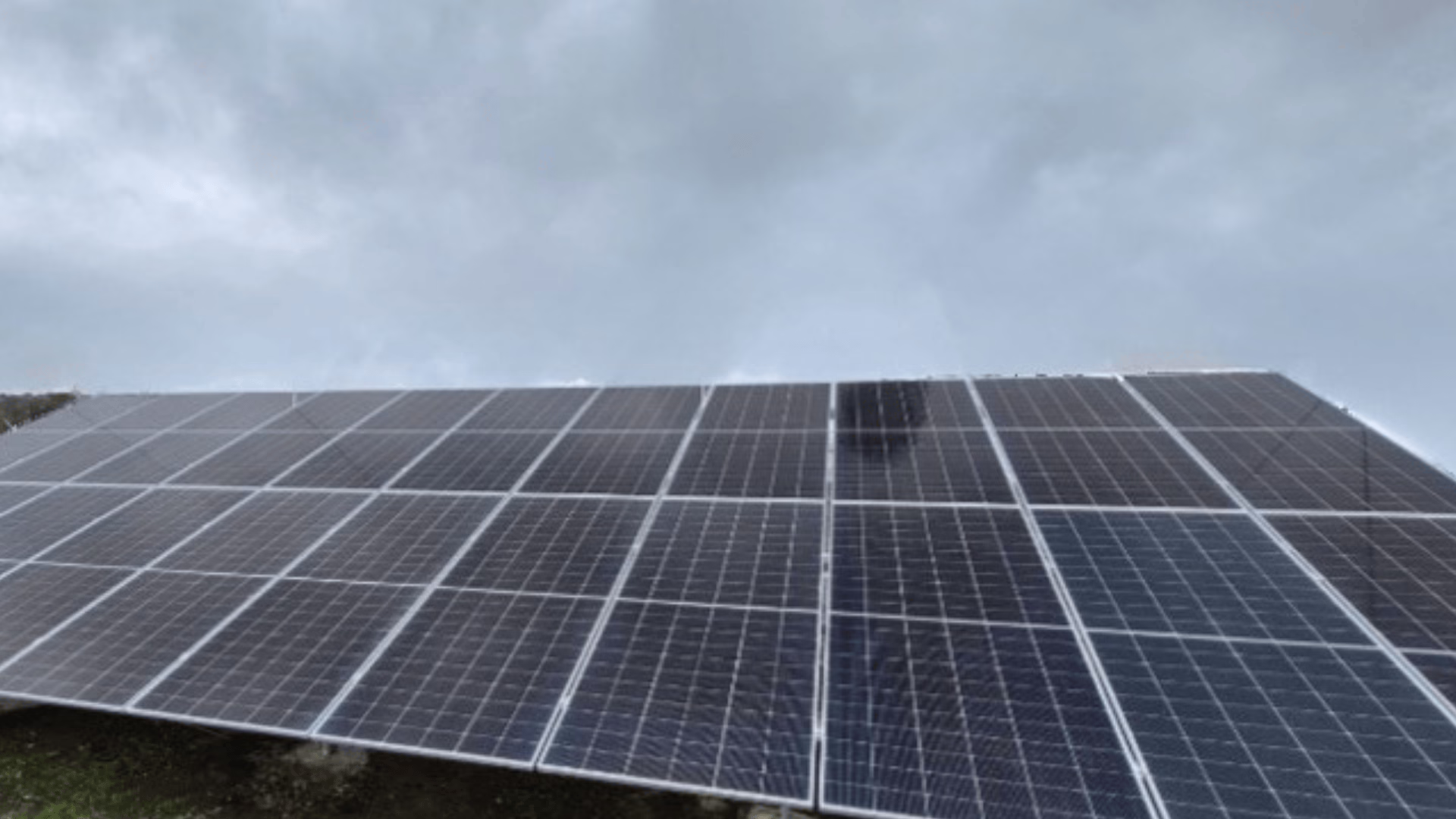
As of February 2026, Ecoclub has constructed 86 solar power plants for critical infrastructure, with a total installed capacity of 4.4 MW of solar PV and 2,550 kWh of battery storage.
Thanks to Ecoclub’s work, hundreds of similar initiatives have become possible by applying the organization’s models and approaches. The readiness of municipalities to invest in renewable energy solutions has increased significantly, and in Ukraine, installing solar power plants to supply water utilities and hospitals has become a standard and widely accepted solution.