












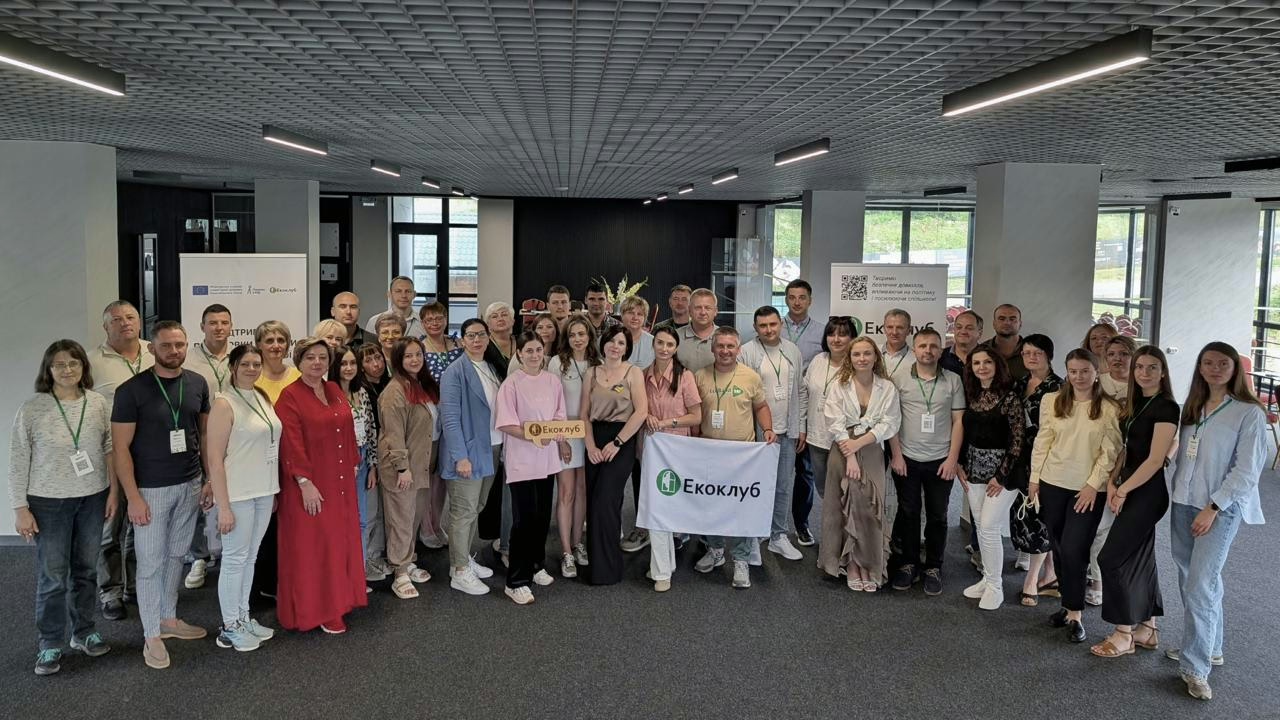
Planning during wartime sounds difficult, frightening, and – as many say – “not the right time.” But 16 communities in the Sumy and Dnipropetrovsk oblasts proved otherwise. Despite shelling, an unstable security environment, resource shortages, and other challenges, they continued working toward their future and the present–day comfort of their residents.
In 2025, in partnership with the Czech humanitarian organization People in Need and with financial support from the European Union, we launched the project “Supporting Winter Preparedness and Renewable Energy at the Local Level in Ukraine.”
The first step was selecting communities that wanted to strengthen their energy resilience. For some, this meant an opportunity to learn about energy management and develop a Municipal Energy Plan (MEP); for others, it was a chance to rethink their approach to energy efficiency and begin acting more systematically.
The project’s overarching goal was to strengthen the energy resilience of communities in Sumy and Dnipropetrovsk oblasts, support the transition to renewable energy sources, and help local authorities improve their energy development planning.
Today, all Ukrainian communities are required by law to develop energy plans. However, our aim went beyond simply helping draft this important document – we also wanted to ensure that communities began implementing the measures they had planned.
Over the course of a year working alongside Ecoclub experts, communities not only transformed their approach to planning but also achieved concrete results:
- 17 strategic documents – Municipal Energy Plans (MEPs) and Sustainable Energy and Climate Action Plans (SECAPs) developed
- 15 detailed design estimates (DDEs) – enabling communities to launch renewable energy projects as soon as funding becomes available
- 16 communities adopted energy planning practices
The technical projects include installing solar power systems for schools, hospitals, and water utilities, as well as upgrading heating systems and public buildings.
Despite the difficulties, communities kept working. Some had to navigate data gaps, a shortage of specialists, or complex internal document approval procedures. Several communities were forced to withdraw from the project due to the security situation. We sincerely hope that in time they will be able to return to this work and continue developing their communities under safer and more stable conditions. We have previously shared detailed accounts of individual communities’ experiences.
Another important outcome is that communities began implementing energy management systems. For some, this is an entirely new area – one that will allow them to better monitor energy consumption, plan expenditures, and identify savings opportunities more quickly. Communities are already designing medium–term programs that they themselves have defined to improve the quality of life for their residents.
“We are very proud of this project. Community representatives developed the strategic documents themselves – we only provided expert support and training for local specialists. This format is precisely what helps the people who will be implementing the document to better understand it, while also building the capacity of local professionals,” says Nataliia Kholodova, Project Manager at Ecoclub NGO.
Finally, we are sharing the advice and takeaways from participating communities for those who are just beginning to develop their own strategic documents:
- Set realistic timelines: the standard for quality document development is six to nine months.
- Establish a systematic approach to data: without up–to–date and verified information, the preparation process often drags on. Start collecting data as early as possible.
- Build an energy management system: this is what will enable a community not only to create a plan but to implement it effectively.
- Follow the methodology: adhering to the prescribed methodology will make every stage significantly easier and faster.
- Maintain a consistent team: replacing specialists mid–process can extend timelines and disrupt momentum.
- Align your strategies: energy plans should be harmonized with the community’s other strategic documents.
- Engage external expertise: an outside expert can offer a fresh perspective on your community and help maintain focus on what matters most.
“Developing strategic plans allows communities to better understand where they stand and to identify the next steps for development. It helps them avoid ineffective projects and choose priority areas for directing resources – even when those resources are limited,” says Maryna Halushko, Project Coordinator.
Over a year of collaborative work has produced a remarkable outcome: communities now have not just strategic documents but ready–made solutions to improve the lives of their residents. These plans are legally compliant and will serve as the foundation for all subsequent steps. One final stage remains – securing funding through grant applications or municipal budgets to turn these plans into reality.
We are proud to be part of this change. Working with communities that choose development despite every challenge has proven that planning for the future is both possible and necessary – right now. We are convinced that Ukraine needs more projects like this, because it is precisely these kinds of local transformations that build the future of the entire country.
The content of this material is the sole responsibility of the NGO Ecoclub and does not necessarily reflect the views of its partners or the European Union.