












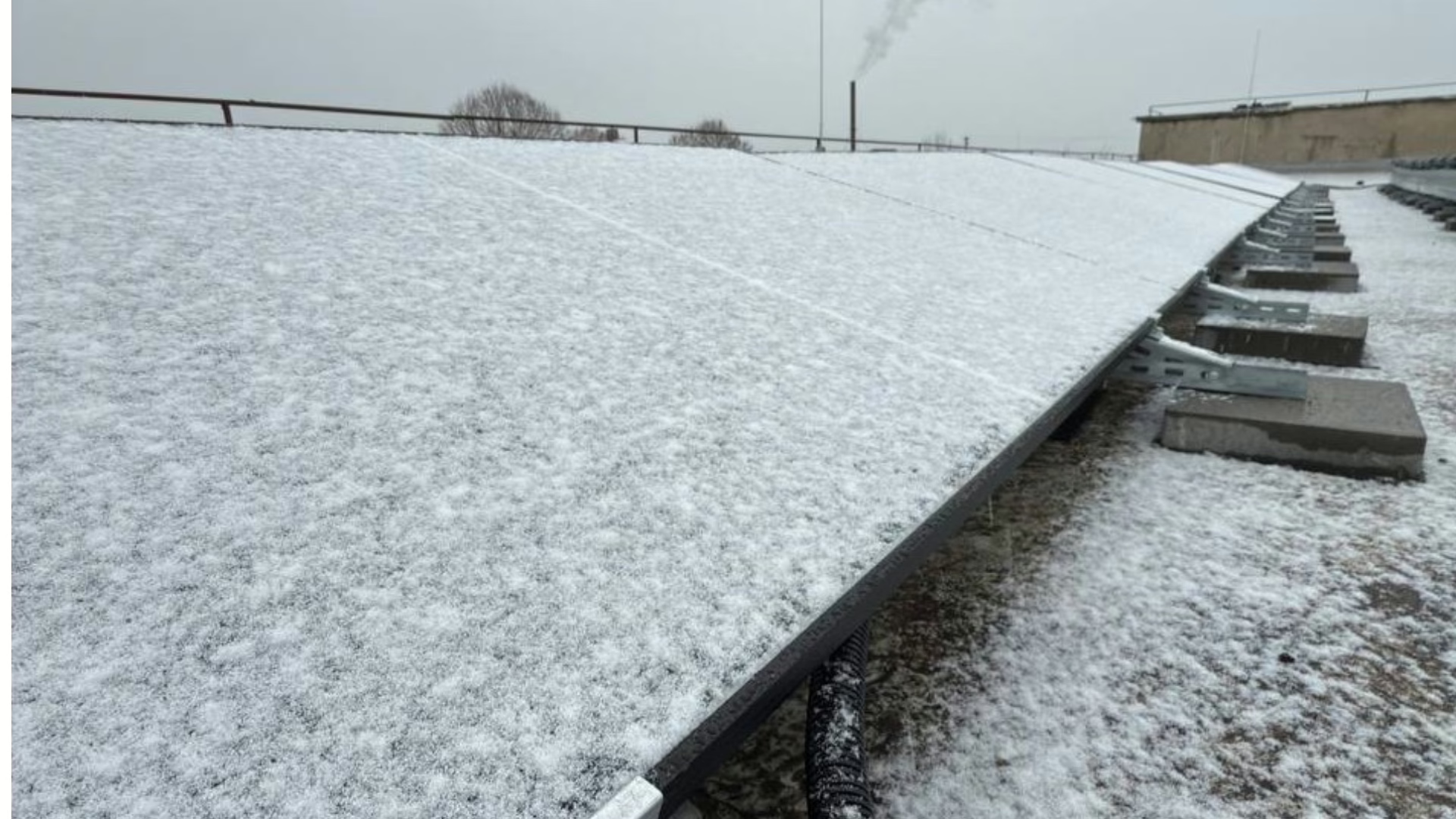
This January has been the most difficult since the start of the full-scale war. Prolonged frosts, the shortest days of the year, and massive attacks on energy infrastructure have all come together at the same time. Russia is attacking substations, power plants, and networks, effectively trying to freeze the country. Ukrainians are already feeling the consequences: in addition to the lack of light in their homes, they have lost access to water, heat, and medical care. On days like these, the presence of electricity is a matter of safety and survival. That is why we analyzed the experience of solar power plants at critical infrastructure facilities in January.
What solar power plants do and don’t do in winter
Short hours of daylight, cloudy weather, snow, and frost mean minimal solar generation. Moreover, some solar power plants did not generate any electricity at all during this period. This primarly concerns stations installed on roofs in regions with heavy snowfall and blizzards, as the panels were covered with snow. The Ecoclub studied what was happening with the solar power plants that were installed with its support.
Firstly, a few definitions.
- Grid-connected solar power plant is a plant that generates electricity from the sun and only operater when there is electricity in the grid; during outages, it automatically shuts down.
- Hybrid solar power plants are stations with batteries that can store electricity and provide power to a facility even when the general grid is down.
The incident that led to the analysis
The catalyst for this study was a conversation with the head of the water intake pumping stations in Mykolaiv after one of the most intense waves of attacks. At a time when the city was experiencing prolonged power outages, he noted that water supply facilities equipped with solar power stations with batteries were almost unaffected by the outages.
“The pumps worked even when there was no light around. People in the area had water – both technical and drinkable. During those days, we truly felt the difference between a facility with a backup power supply and one without it for the first time,” said Tymofii Prokopenko.
Three points on the map of Ukraine
Our analysis includes critical infrastructure facilities in various regions of Ukraine where Ecoclub has installed hybrid solar power plants with batteries: a water utility in Mykolaiv, a fire stations in Kamianets, and a hospital in Chortkiv.
The period from January 5 to 15 coincided with massive attacks on the energy sector, prolonged power outages, and minimal solar generation.
Generation volume is influenced not only by weather conditions. The technical characteristics of the station also play an important tole: the geographical location of the photovoltaic modules, their angle of incline, orientation relative to the cardinal points, as well as the ratio of the power of the photovoltaic modules and hybrid inverter to the total electricity consumption of the facility. These parameters determine how a particular solar power plant behaves in winter, even in the same weater conditions.
How it worked in reality
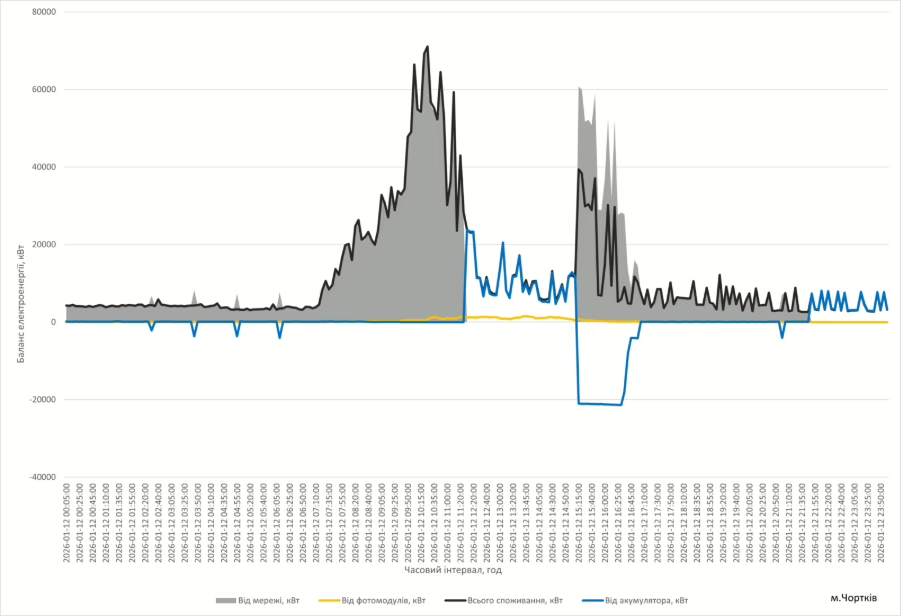
During the analysis period, Chortkiv experienced heavy and prolonged snowfall, which sagnificantly limited solar power generation. This facility has a hybrid solar power plant with a hybrid inverter capacity of 50 kW, a photovoltaic module capacity of 23.33 kW, and a battery capacity of 40.8 kWh.
In 11 days, the solar power plant generated 103 kWh, which is 4% of the hospital’s total electricity consumption. Total consumpion for this period was 2,526 kWh, of which 2,489 kWh was obtained form the grid.
The daily graph for January 12 clearly shows how the ssytem worked during power outages. During the period of complete power outage from 11:20 to 15:15, the hospital operated thanks to batteries that provided power to critical medical equipment. After 15:15, when the power supply from the grid was restored, the graph shows that the amount of electricity coming from the grid exceeded the hospital’s current consumption. This means that the batteries were being charged at that time.
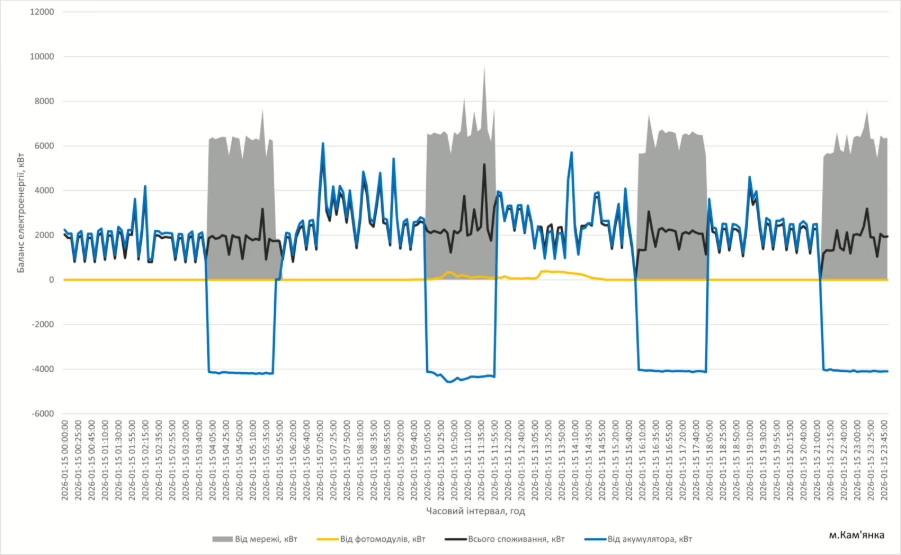
In Kamyanka, weather conditions during the analysis period were less extreme, but power outages remained regular. This facility has a hybrid solar power plant with a hybrid inverter capacity of 20 kW, a photovoltaic module capacity of 8.19 kW, and a battery capacity of 20.48 kWh.
Between January 5 and 15, the solar power plant generated 43 kWh, which represented 9% of the fire department’s total electricity consumption. Total consumption during this period was 473 kWh, of which 457 kWh was obtained from the grid.
The graph for January 15 shows four planned power outages during the day. During each of these periods, the fire station continued to operate thanks to the batteries.
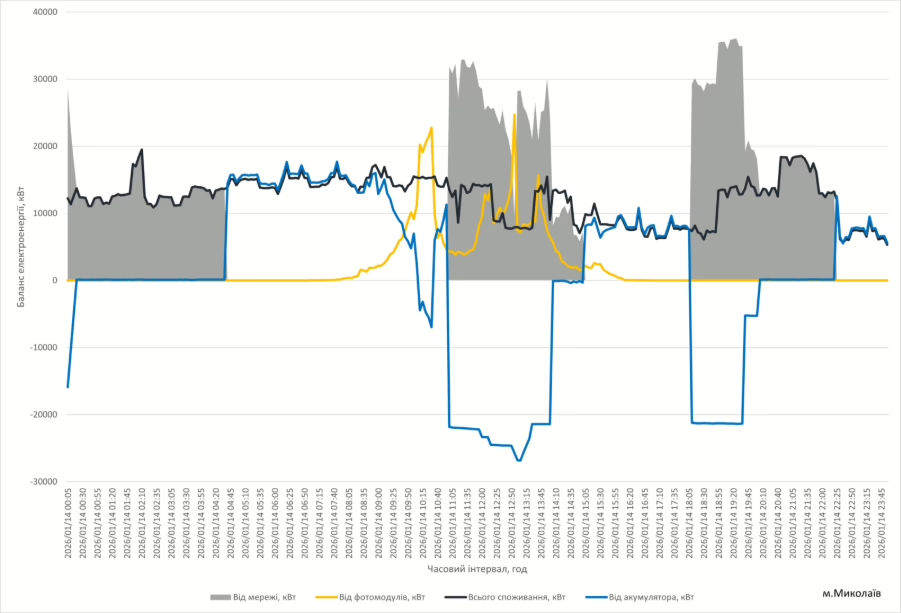
Mykolaiv shows completely different results. Here, weather conditions were relatively more favorable in terms of insolation, even despite frost and snow. A hybrid solat power plant with a hybrid inverter capacity of 30 kW, a photovoltaic module capacity of 38.44 kW, and a battery capacity of 204.8 kWh was installed at one of the water utility facilities.
Between January 5 and 15, the solar power plant generated 344 kWh, which is 17% of the total electricity consumption. The total consumption of the facility was 2,039 kWh, of which 1,774 kWh was obtained from the grid. This share of generation in winter shows that solar power plants can play a more significant role in southern regions.
The daily graph for January 14 shows that from 8:00 to 16:00, solar generation partially covered the facility’s consumption and even charged the batteries at certain timer. In total, the water utility remained without power from the grid for about 12 hours that day, and it was the combination of batteries and daytime generation that ensured the uninterrupted operation of critical processes.
The graphs for all three facilities clearly show one common feature: during periods of complete power outages, critical processes were maintained thanks to batteries. They were the element that worked regrdless of the region, even when solar generation was insufficient.
Conclusion
Even a small amount of solar generation during the day adds flexibility to the system and reduces dependence on the grid. This is particalarly important for distribution network operators, who urge solar power plants owners to clear snow from their panels, as every extra kilowatt helps to relieve the load on the power system.
With minimal or no solar generation, batteries become a key element of the system. They are charged from the grid during hour when electricity is available and take on the load during outages.
The experience of Chortkiv, Kamianka, and Mykolaiv shows that the winter results of hybrid SPPs vary depending on the region, weather conditions, technical configuration of the station, and consumption profile. At the same time, in all cases, these systems increase the resilience of critical infrastructure and allow periods of outages to pass without stopping basic functions.