












A reliable water supply, hospital services and children’s education all depend on electricity. When power cuts occur, communities need solutions to keep essential facilities and services running.
In Rivne Oblast, this challenge is becoming increasingly urgent. The deteriorating security situation and the threat of further attacks on energy infrastructure mean that communities must prepare for possible disruptions to their electricity supply.
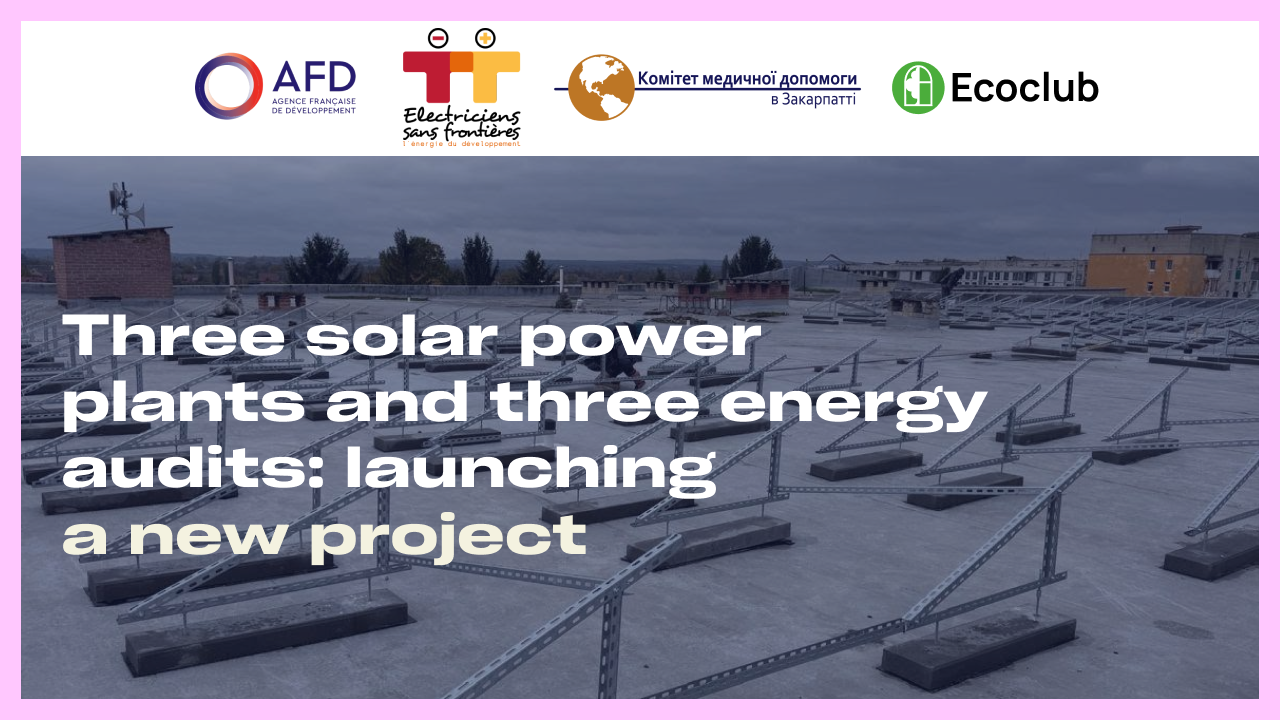
Ecoclub, together with the French organisation Électriciens sans frontières (Electricians Without Borders), is launching a new project in the Mlyniv community. As part of the project, we plan to install three solar power plants — at the water utility, hospital and lyceum. We will also conduct three energy audits to help the community identify opportunities to reduce energy consumption and further modernise its buildings.
How will the solar power plants benefit the community?
With attacks on energy infrastructure remaining a constant threat, communities need to be prepared for emergency power cuts and other crises. This is particularly important for facilities providing essential services that meet residents’ basic needs.
Installing solar power plants at the water utility, hospital and lyceum will help the Mlyniv community reduce its reliance on the centralised electricity supply and strengthen the energy resilience of these facilities.
For the water utility, this primarily means keeping the equipment needed to supply residents with water running. For the hospital, it means a more reliable power supply for medical equipment and systems essential to patient care, including emergency care. For the lyceum, it means being better equipped to remain operational and minimise disruptions caused by electricity supply problems.
All three solar power plants will be equipped with battery storage. This will allow them to store the electricity they generate and keep designated equipment running independently during emergency grid outages. As a result, these facilities will be able to maintain critical functions without relying on the centralised electricity supply.
Another important benefit is lower electricity costs. By using the solar electricity they generate, the facilities will be able to reduce the amount of electricity they need to purchase. The community could then direct these savings towards other needs, including energy efficiency measures identified through the audits. This will help reduce ongoing expenses while allowing the community to invest gradually in further improvements to the energy resilience of its facilities.
Why are energy audits needed?
Energy audits will help establish how efficiently buildings use energy, where the greatest losses occur and how consumption can be reduced.
Specialists will analyse energy consumption data, inspect the buildings and assess the condition of heating, ventilation and lighting systems, along with other equipment. Based on their findings, the community will receive specific recommendations for improving energy efficiency, together with estimated implementation costs and expected savings.
This will help the community prioritise improvements, plan the necessary investments and prepare to seek funding for building modernisation.
Our article, “Why Energy Audits Are Needed” (link to the article), explains in more detail how energy audits are conducted and why they matter for communities.
“For us, the most important thing is that the community can continue providing residents with essential services, even during emergency power cuts and other crises. Installing solar power plants with battery storage will enable the water utility, hospital and lyceum to keep critical equipment running independently of the centralised grid, within the capacity of the backup power systems. At the same time, generating their own electricity will help reduce electricity costs, while the energy audits will identify which energy efficiency measures should be implemented next.
We want the Mlyniv community to gain not only equipment from this project, but also practical experience and an understanding of how to strengthen its energy resilience further, attract funding and implement new projects independently,” said Dmytro Sakaliuk, an expert at NGO Ecoclub.
The PHENIX project in Ukraine is jointly implemented by Électriciens sans frontières and the Charitable Organization “Charity Fund ‘Medical Aid Committee in Zakarpattya’” in partnership with NGO Ecoclub, with financial support from the French Development Agency (AFD).
