












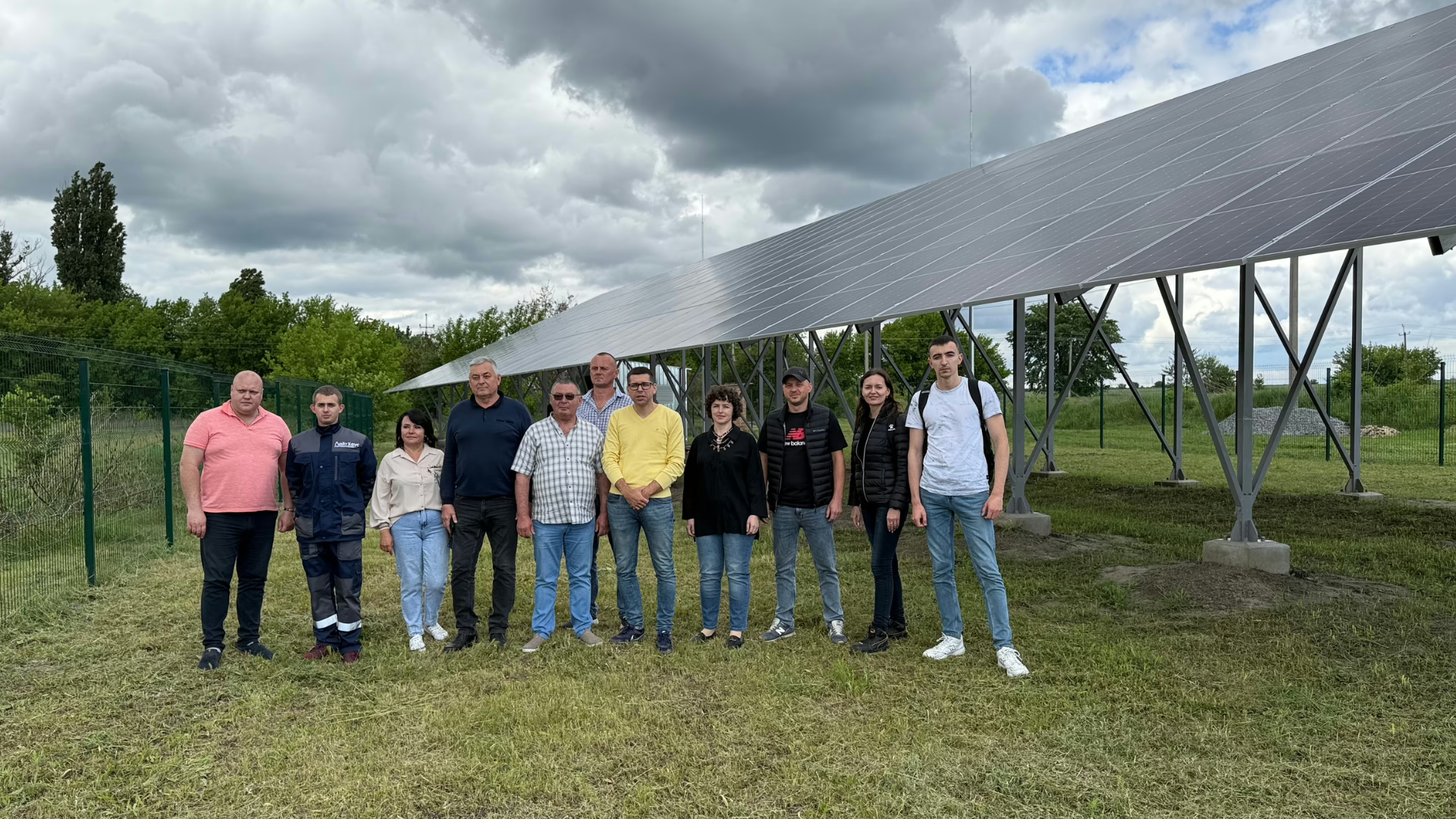
Over the last few years energy resilience has become one of the key safety, stable functioning, and survival factors for Ukrainian communities. People inevitably feel the effects of power outages in their daily lives – no lights at home, difficulties making food, charging gadgets, keeping the rooms warm.
However, outages have much greater consequences on the community scale. Everything depends on the energy supply: running water, uninterrupted functioning of medical facilities and municipal services. When the power is out for a long time, it becomes clear that electricity is needed not only for comfort at home, but also for providing the basic necessities people’s daily lives depend.
Following repeated strikes on the power grid, communities have begun to seek solutions that will not only help them get through the next power outage but also make them less vulnerable in the future. Generators remain a back-up option, but for water utility companies (vodokanals), hospitals or other large facilities, this is often insufficient. Such institutions consume a great amount of electricity, so generators require large fuel reserves, regular maintenance, and staff to monitor their operation. If power outages last for a long time, this quickly becomes an expensive and complex solution.
Therefore, communities are increasingly more frequently looking for solutions that will help them not only to cope with the next power outage, but also to reduce their dependence on the grid. One such solution is solar power plants (SPPs). Whilst they do not replace the power grid entirely, they enable communities to generate some of their electricity locally, rely less on generators, and keep critical facilities running during power outages.
Since 2023, NGO Ecoclub, in collaboration with Scatec, has been helping communities with implementation of such projects from start to finish – from the initial idea to the launch of the plants. For communities, this is not just about the equipment installed, but about gaining experience that helps them better understand their own energy needs, plan the development of critical infrastructure and gradually become less vulnerable to energy-related challenges.
About company
Scatec is an international company from Norway operating in the renewable energy sector and developing solar power projects in various countries around the world. Alongside its commercial projects, the company also supports local communities through educational initiatives, assistance to schools and healthcare facilities, development of local infrastructure, and youth programs.
Scatec has invested in educational programmes for children and young people, supported schools and healthcare facilities, and helped develop local infrastructure and community initiatives in various countries. For example, in South Africa, the company funded programmes to develop education, healthcare and support for local entrepreneurship. In Brazil, it implemented educational initiatives for local communities in the regions where its energy projects are operating. Such programmes form part of the company’s approach to corporate social responsibility — supporting the communities in which it operates.
Scatec is actively implementing a wide range of social initiatives in Ukraine aimed at supporting local communities. At the same time, one of the key areas of support is the field in which the company has the most experience and expertise – the installation of solar power plants.
“Corporate social responsibility is an important part of our company’s policy. We strive not only to achieve commercial results, but also to contribute to the sustainable development of communities, helping them become more self-sufficient and resilient in the face of adversity. Installing solar power plants for municipal facilities is one such step. Not only do they improve energy efficiency and help reduce electricity costs but also ensure the uninterrupted operation of critical facilities during power cuts. This is particularly important in the face of energy challenges, when the stable functioning of social infrastructure directly affects people’s quality of life,” says Alina Sviderska, Director of Scatec in Ukraine.
From idea to solar power plant
Joint projects do not begin simply with the installation of solar panels. First, Ecoclub and Scatec work together to identify a list of potential facilities where a solar power plant could be useful. These are usually pieces of infrastructure that are vital to the community: water and sewerage systems, healthcare facilities, emergency services, municipal utility companies or other facilities on which the lives and well-being of residents depend.
Then, Ecoclub carries out a preliminary assessment of each facility. The team analyses technical and economic indicators: how much electricity the facility consumes, what the capacity of the future solar power plant might be, how much it will cost to install it, and what benefits it will bring to the community. This helps to determine whether it makes sense to build the plant in this specific location and which format will be the most effective.
“It is important to us that a solar power plant is not simply installed but is genuinely needed by a specific facility. That is why, as early as the preliminary assessment stage, we examine whether the project is technically feasible, economically viable, and beneficial to the community. If the assessment confirms the solar power plant’s potential, the project moves on to the next stages of preparation,” explains Dmytro Sakaliuk, project coordinator.
Once a project successfully passes the preliminary assessment, Scatec, together with representatives of the local community and the facility, go through the necessary approval procedures, including public consultations. Following this, Ecoclub organises the preparation of a preliminary feasibility study (pre-FS) and project design and cost documentation (PDCD). These documents define the key technical details: the plant’s capacity, the location for the equipment, the method of connection, and the cost of the works.
Next, Ecoclub holds a tender and selects a contractor to build the station. During the construction phase, the team oversees the project’s implementation: it coordinates the parties involved, monitors the progress of the work, and helps to resolve any issues that arise during installation.
Once construction is complete, Ecoclub helps with all the procedures required to launch the station. This includes preparing and finalising the necessary documentation, coordinating with the distribution system operator, and other technical and organisational steps without which the solar power plant cannot fully operate. Thus, the community receives support right up until the station begins generating electricity to meet the facility’s needs.
Scatec provides funding for the necessary works within the project, but implementation takes place in partnership with the communities – on mutually agreed terms. Thanks to this approach, the community receives not only the equipment but also comprehensive support at every stage – from the initial idea to the moment the power plant begins generating electricity.
‘It is important to us that the community does not just receive a ready-made solar power station but is involved in the process from the very beginning. For many communities, it is their first experience with such energy projects, so we help with technical matters, as well as with coordination, paperwork, and communication with partners and contractors. This way, the community gains a better understanding of its own energy needs, learns how to manage such projects and will be able to plan future projects or development independently,’ says Dmytro Sakalyuk, project coordinator.
Communities and facilities: what has been achieved
Over the course of three years of collaboration, ‘Ecoclub’ and Scatec have implemented six solar power plant projects in local communities. Five of these are in operation at water supply and treatment facilities, and one at a fire and rescue station.
However, the number of plants installed does not fully reflect the scale of the work. Some projects were carried out in several stages: initially, a lower-capacity plant was installed, and later, as funding became available, new panels, batteries or other equipment were added. This allowed communities and Scatec to proceed gradually, rather than postponing the project until full funding was available, whilst strengthening the operation of key facilities right from the first stage.
Behind every station lies not just equipment, but real benefits for people. It means water for homes and businesses, the ability to keep essential services running during power outages, and a step towards energy independence for local communities.
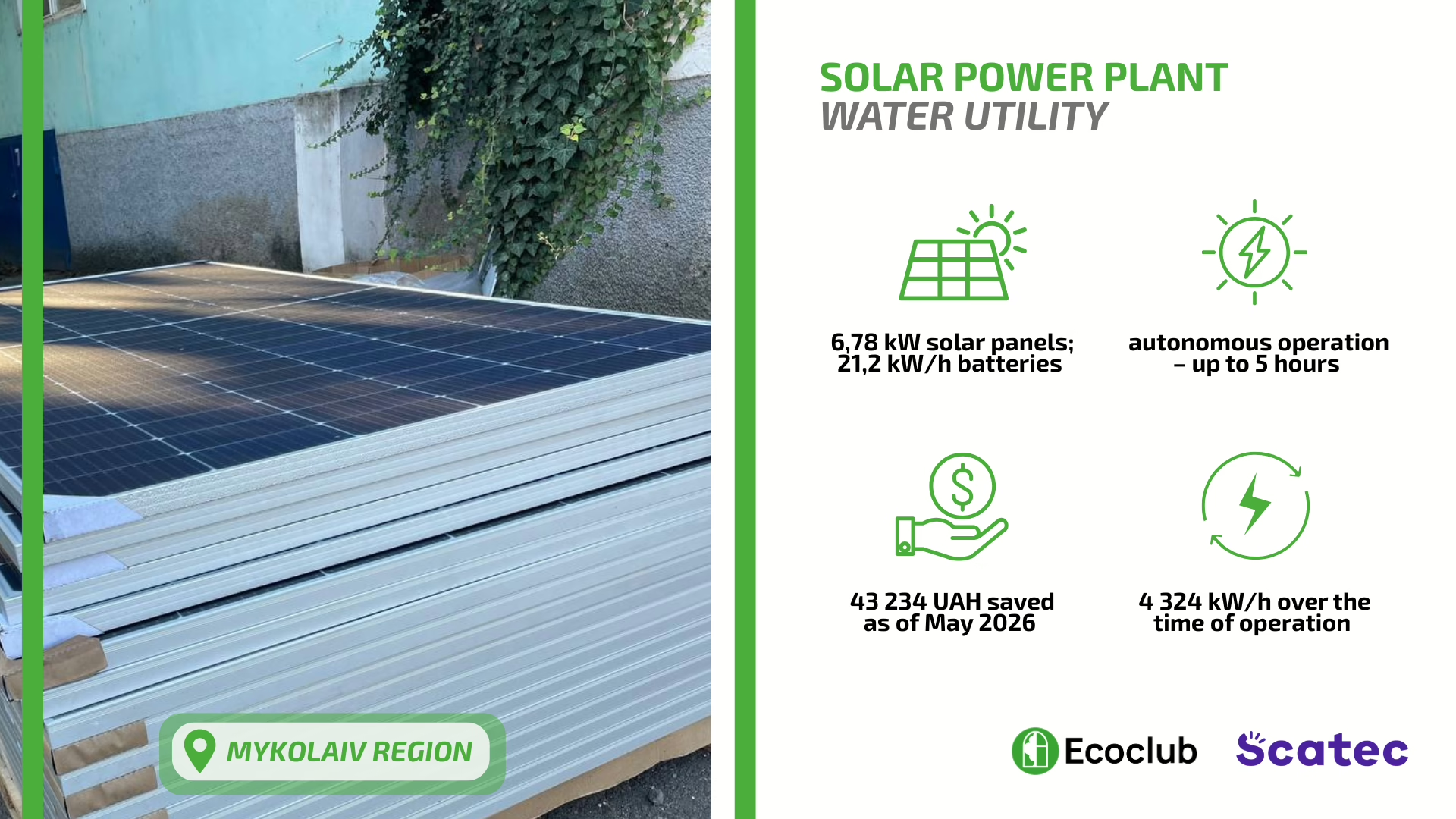
In the Mykolaiv region, a solar power plant was installed for a local municipal utility company that supplies water to residents. It helps to maintain the water supply during power outages and covers more than half of the company’s annual electricity consumption.
As agreed with the local community, the project, costing over UAH1.2 million, was fully funded by Scatec. The plant helps to reduce CO₂ emissions by approximately 4 tonnes per year.
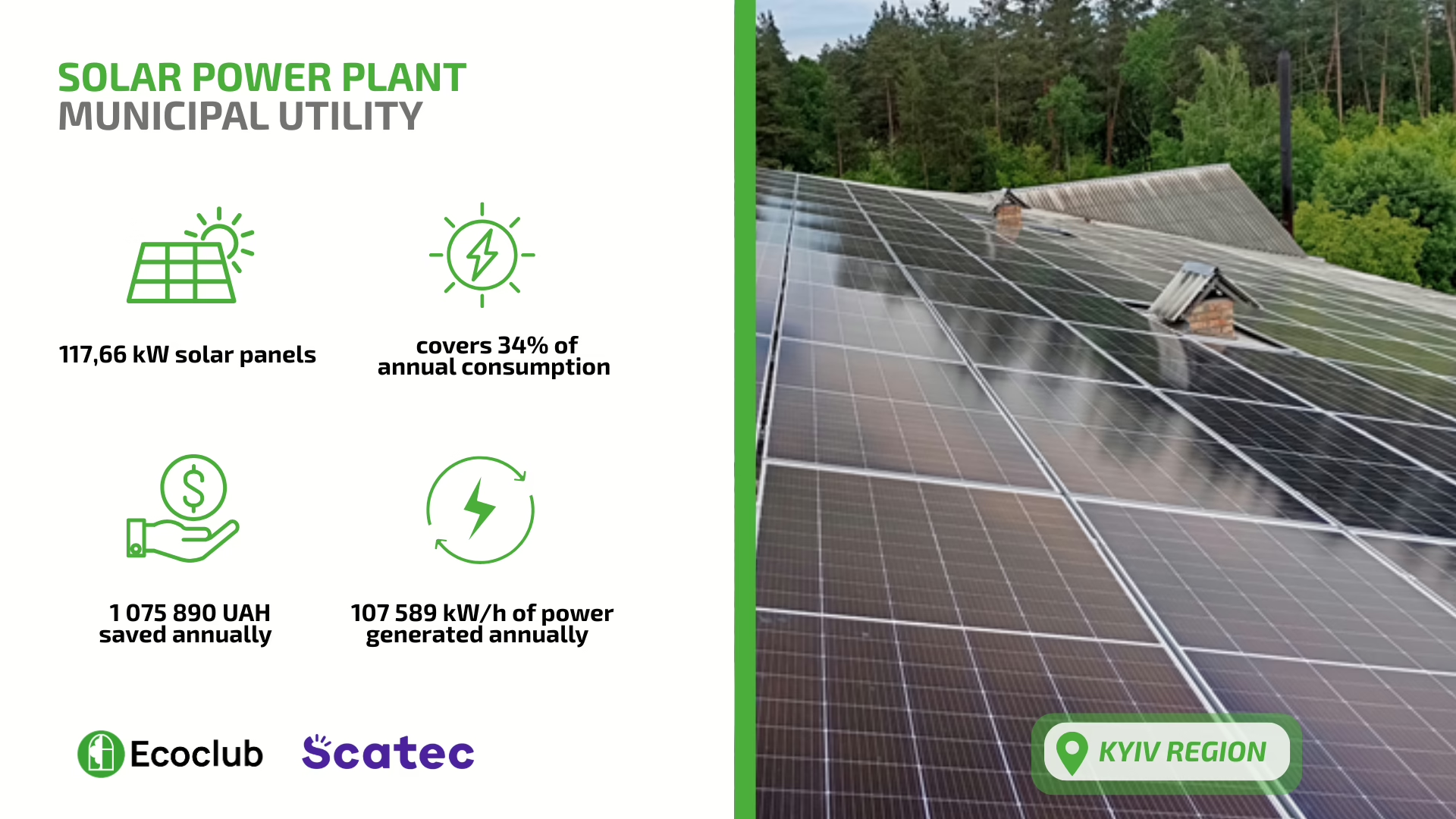
In early 2025, a solar power plant was installed in the Kyiv region for a municipal utility company that supplies water to over 5,500 customers. In the summer of 2025, the plant was expanded, so it now helps the utility company reduce its reliance on electricity from the grid and save over one million UAH a year.
The total cost of the two construction phases is over 4 million UAH. The company contributed 947,107 UAH towards the construction, whilst the local community co-funded an additional 299,817.21 UAH. It is estimated that the station will pay itself off in approximately three years, and CO₂ emissions will be reduced by almost 54 tonnes per year.
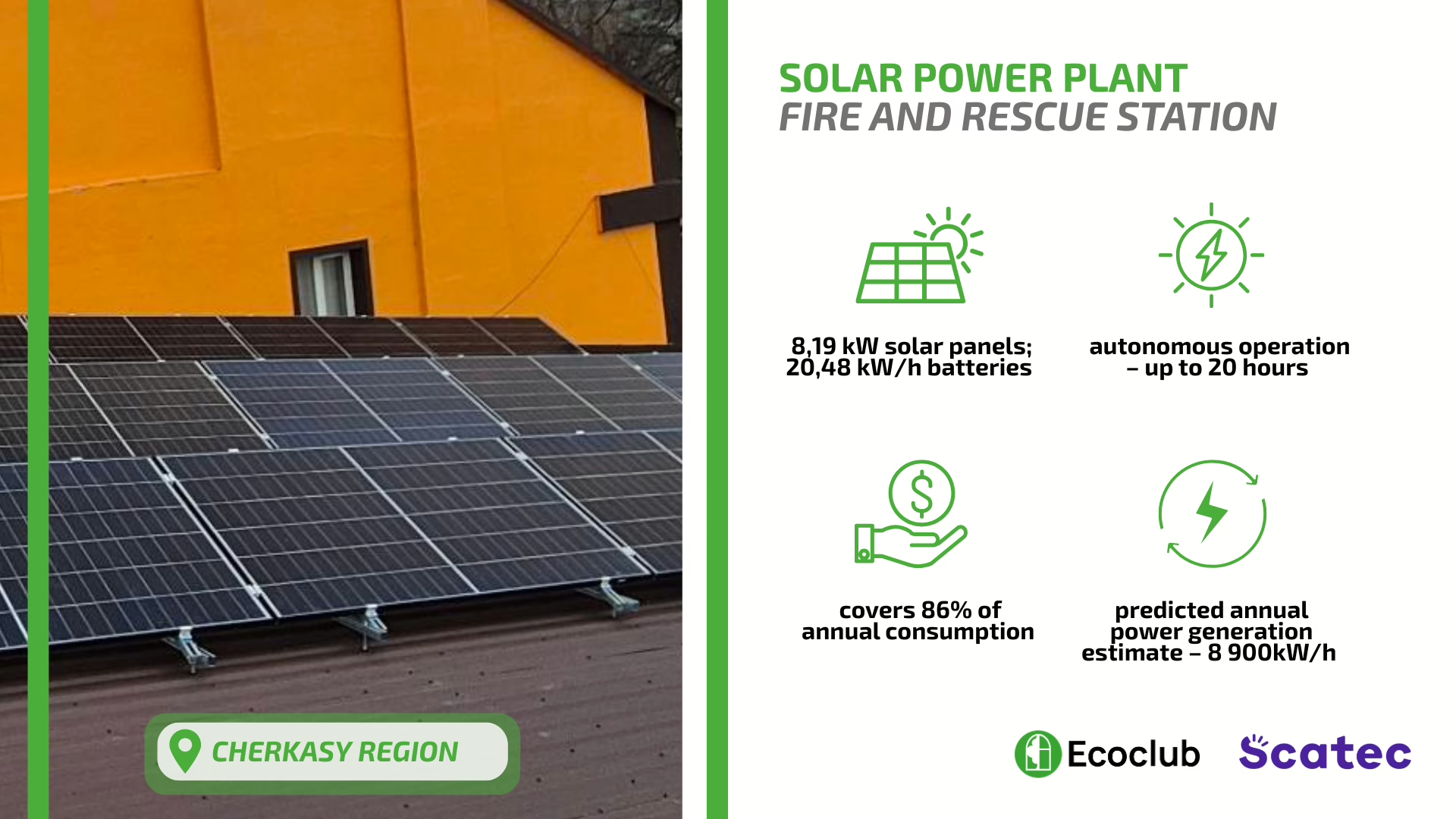
In April 2025, a solar power plant was installed in the Cherkasy region for a fire and rescue station, which also serves as a ‘Point of Resilience’. During power outages, people can come here to charge their phones, access water, and receive basic assistance.
The project was fully funded by Scatec – at a cost of over 800 thousand UAH – whilst the fire and rescue station, as part of the collaboration, prepared the roof for installation. The solar power plant helps to cover almost all of the facility’s electricity needs and will reduce CO₂ emissions by approximately 4.4 tonnes each year.
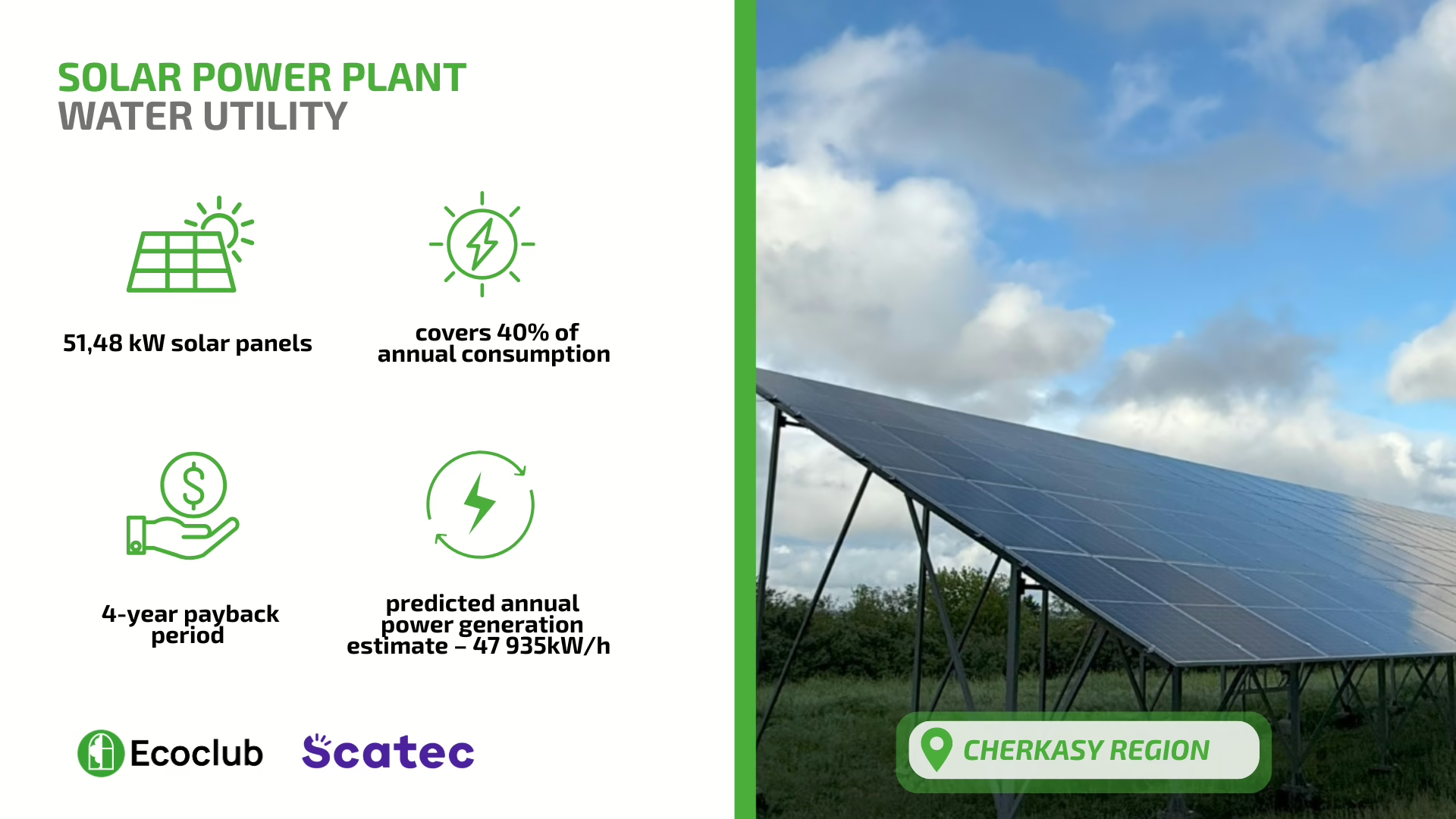
Another solar power plant in the Cherkasy region was also installed in April 2025 for a water utility company, which provides services to over 5,000 residents and around 250 businesses and self-employed individuals. Thanks to the plant, the company can reduce its reliance on electricity from the grid and save on its consumption.
The total cost of the project was almost 1.7 million UAH, part of which was funded by the local community. Over the course of a year, the plant helps reduce CO₂ emissions by almost 24 tonnes.
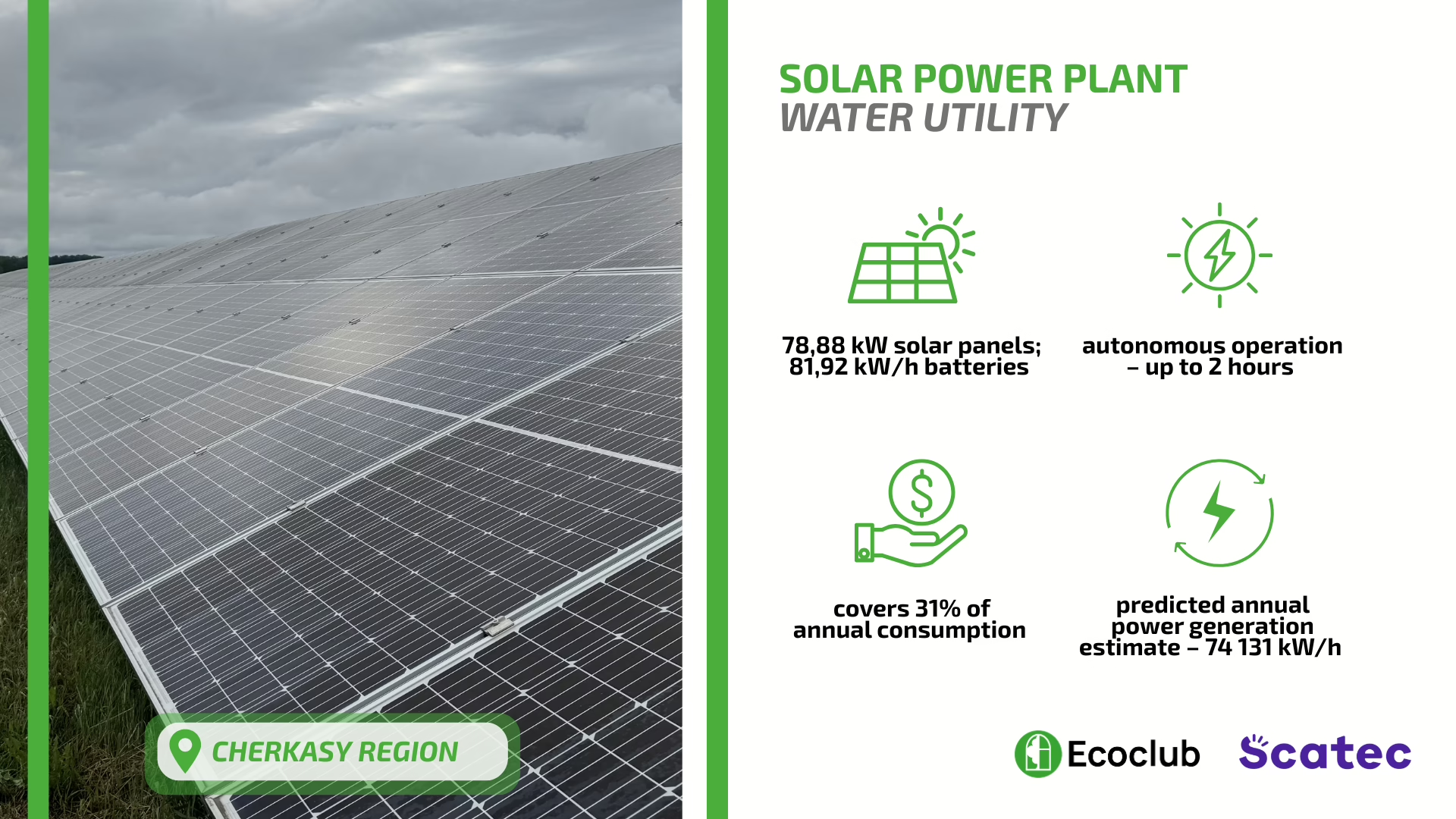
The third solar power plant in the Cherkasy region was installed for a water utility company, which supplies water to around 6,500 residents. Once completed in 2026, the plant will help to power the borehole pumps through the installation of batteries.
The plant was built and expanded thanks to co-funding from the local community and Scatec. The total cost of the project exceeded 3.2 million UAH. The plant is expected to pay for itself in around four years, and the annual reduction in CO₂ emissions will be around 37 tonnes.
Why collaboration is more important than standalone projects
For communities, these projects have not only provided an opportunity to acquire a solar power plant and help residents but have also served as their first steps towards energy management. They have learnt how to properly assess the needs of facilities, work with partners, prepare documentation, and commission power plants.
After their first experience of this kind, communities have a better understanding of which facilities additional power the most, what data needs to be collected for a new project, and how to plan its implementation. This helps them avoid having to start from scratch every time and instead use the knowledge they have already gained for future energy solutions.
The approach to energy resilience is also gradually changing. Instead of temporary ‘just-in-case’ solutions for power outages, communities are beginning to plan how to make critical facilities less dependent on an unstable power grid. This experience is important not only for Ukraine. We are grateful for this collaboration, which has clearly demonstrated that support for communities does not end with the completion of the project, as solar power plants will continue to help reduce costs and ensure the stable operation of critical facilities for many years to come.
“The history of collaboration between Scatec, ‘Ecoclub’ and local communities proves that when different parties unite around a common goal, the result exceeds the sum of their individual efforts. Such partnership not only contributes to the successful implementation of development projects but also creates opportunities for change that none of the parties could have achieved on their own,” – Olga Boichuk, Social Investment Manager at Scatec in Ukraine.