












On the map of Lviv Oblast, Pustomyty stands out not only for its location but for its ambitious vision of a sustainable future. Local authorities are actively seeking solutions to improve residents’ quality of life while introducing new approaches to energy efficiency and climate change mitigation. One such step was participating in Ecoclub’s competition “Strengthening Climate Actions in Ukrainian Communities.”
Out of many applicants, Pustomyty became one of ten communities chosen to receive expert support. Through this cooperation, the community is developing a financial tool to install solar power plants at municipal institutions – and is competing for a €10,000 grant to deploy it.
Why is the community going all-in on solar? What will this mean for its residents? We spoke with Andriy Pelekhatyy, Deputy Mayor of Pustomyty for Executive Bodies of the Council.
– Andriy, tell us a few words about your community.
Our community has over 15,000 residents and consists of 10 settlements. The administrative centre is the city of Pustomyty, with an estimated population of 9,500, alongside nine rural settlements. We have two administrative sub-districts – Semenivka and Mistky. The community’s primary revenues come from business activity: an oil production plant and a metal-plastic manufacturing company both operate here.
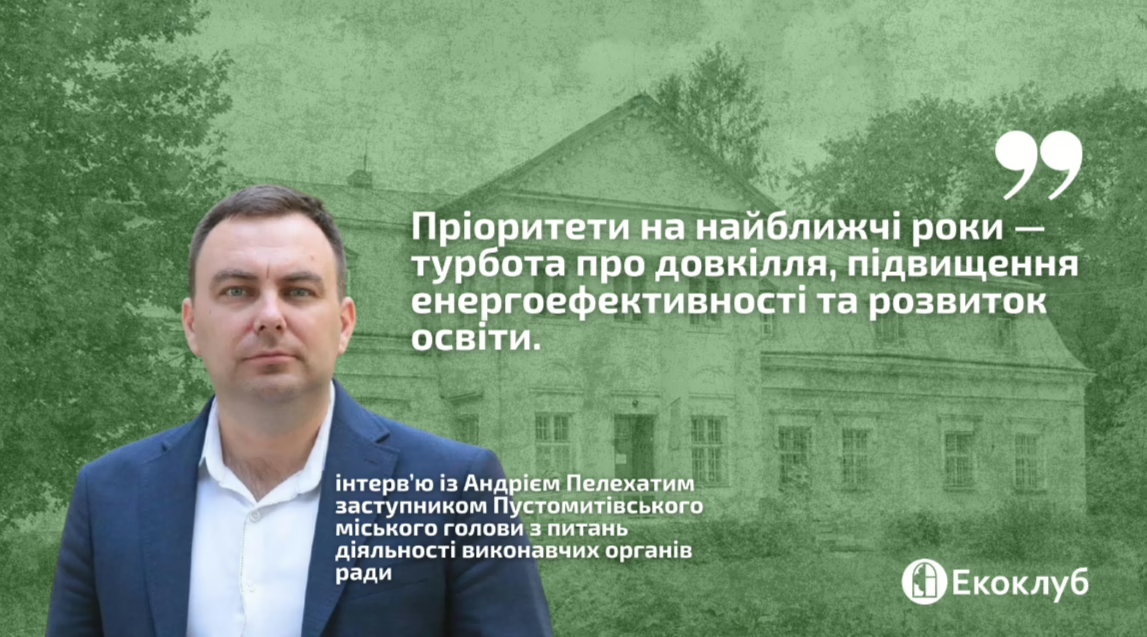
Our priorities for the coming years are environmental stewardship, energy efficiency, and education. We also direct a significant share of the municipal budget to supporting our military personnel defending the country.
– What energy challenges is the community currently facing?
The war has shown that we cannot take daily energy supplies for granted. So we have set ourselves an ambitious goal: to thermally modernise our buildings and achieve energy autonomy.
We are currently working on securing a loan from the European Investment Bank (EIB) for the thermal modernisation of three facilities: the hospital, the outpatient clinic, and Mistky Lyceum. We are developing the design and cost estimates using grant funding; we will sign the agreement soon and plan to begin works next year.
Another important focus is installing solar power plants and heat pumps at social infrastructure facilities.
– Does the community have an energy management system? What results has it produced?
The energy management system has been running for two years. It gave us a clear picture of our energy consumption levels and made the need for thermal modernisation apparent. That became the push to look for financial instruments – and we settled on the EIB loan, which allows us to implement all planned measures in a comprehensive way.
We also won another project covering the partial replacement of water supply networks, sewerage construction, and SPP installation. A design for a solar power plant at the wastewater treatment facility has already been developed. After the thermal modernisation phase, we plan to move on to the hospital, the clinic, and the kindergartens.
– Why do you plan to install SPPs at preschool facilities?
Renewable energy is something we want to bring specifically to kindergartens. One of them has a large swimming pool – we plan to install a heat pump to heat it, keeping the pool open year-round, including through the heating season.
– What financial tool are you developing, and why does the community need it?
Our goal is to install solar power plants at municipal institutions and put the resulting savings back into new projects. The logic is straightforward: one SPP generates savings – which fund the next station. This way we can gradually expand our solar capacity without going back to the council for funding each time. Further down the line, we also want to roll out heat pumps.
This tool is being developed exclusively for municipal institutions – not for businesses or private individuals. Private companies are already actively supporting the community, and after consulting with them we decided this mechanism should focus on municipal infrastructure.
– Do you plan to support condominiums (OSBBs) in the future?
Yes, we are prepared to subsidise the interest on “warm loans” if residents take them out to install solar power plants.
We work actively with condominiums and encourage them to pursue thermal modernisation and renewable energy. This is an important step toward energy stability, meaningful cost savings, and improved well-being for building residents.
We have already invited representatives from communities where condominiums actively use Energy Efficiency Fund programmes to share their experience. We hope this will inspire our own condominiums to act.
– What are your plans for attracting donors or investors to scale up these changes?
We are open to ESCO contracts. At the moment we are looking for funding to install an SPP at the wastewater treatment plant – by our estimates, such a project will pay back quickly.
We are also in talks with various donors about solar panels and heat pumps. The European Investment Bank could provide €300,000 in grant support. With that additional backing, we would be able to fully supply the hospital and clinic with heat and electricity, making them independent of external grids.
– Where does your motivation to transform the community come from?
Our community is a signatory to the Covenant of Mayors initiative of the European Commission. This lets us learn from other communities and adopt good practices. We have started planning several years ahead – as European municipalities do.
We first engaged with the EIB project back in 2023. A year and a half has passed, and it will be two and a half years from the initial application before we can begin physical works. But the result is worth it – a complete thermal modernisation of three buildings in the community. Trust the process.
– How will this affect the community’s energy resilience?
By our estimates, the thermal modernisation of the hospital and clinic will reduce energy consumption by up to 40% – around UAH 2 million per year in savings. The funds are borrowed, but the savings will allow us to repay the loan ahead of schedule and then reinvest the surplus into further energy efficiency projects.
The project is supported by the IKI Small Grants programme, part of the International Climate Initiative (IKI). IKI Small Grants is funded by the Federal Ministry for Economic Affairs and Climate Action (BMWK) and the Federal Foreign Office (AA) and implemented by Deutsche Gesellschaft für Internationale Zusammenarbeit (GIZ) GmbH.