












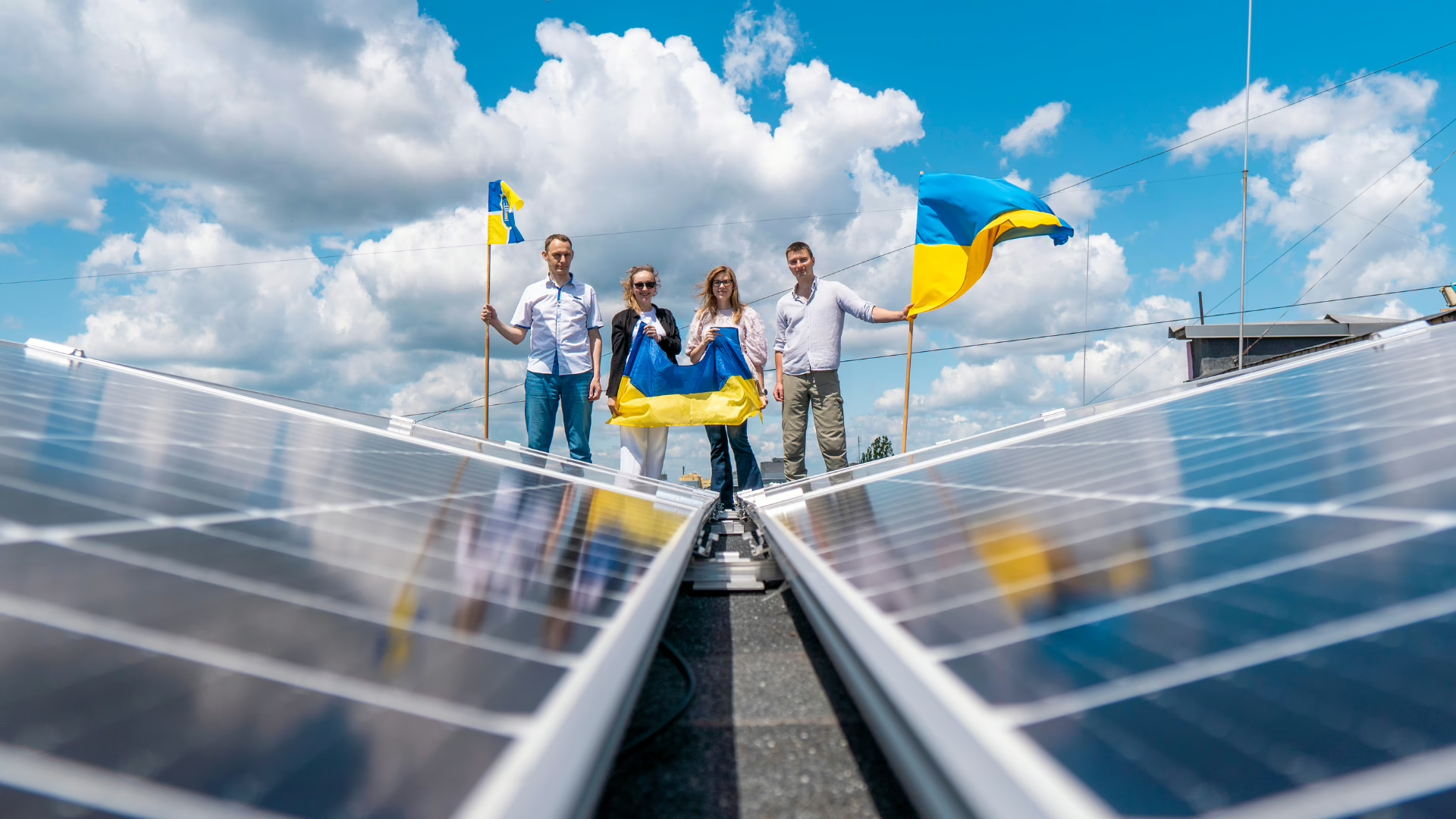
NESEHNUTÍ is an independent Czech non-governmental organization founded in 1997. Its activities are focused on protecting human rights, developing civil society, and promoting environmental justice. The organization is known for not being afraid to deal with sensitive issues, from combating discrimination to protecting green spaces in cities.
The NESEHNUTÍ team is now focusing its efforts on supporting Ukraine. Since the start of the full-scale invasion, the issue of energy security has gone from being a technical matter to a matter of survival for many communities.
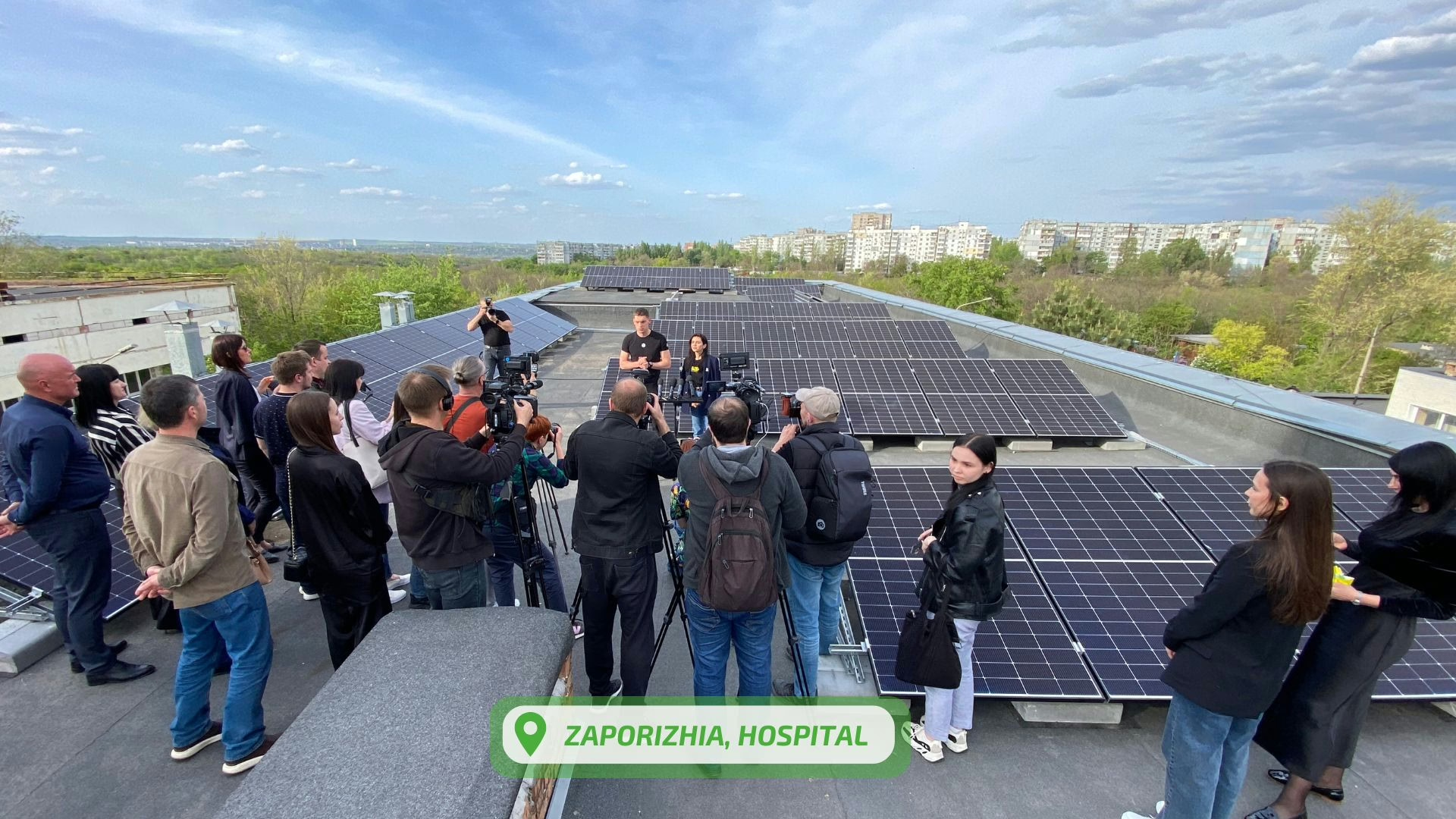
The organization is a direct partner of the Ukrainian non-governmental organization Ecoclub, which has been working for over 25 years on the development of renewable energy and improvement of energy efficiency. Ecoclub’s team supports communities in installing solar power plants at hospitals, water utilities, and other critical infrastructure to ensure a stable power supply even during blackouts.
In this interview, we will talk to Alžbeta Kofranková and Pavla Hofmeisterová, who represent NESEHNUTÍ’s work related to supporting Ukrainian society. They are directly involved in projects that help communities and activists in Ukraine, so they share their experience and insights from within this process.
— Tell us a little about yourself: who are you and what role do you play in the organization?
Pavla: I work in a small team, which focuses on supporting the stability of Ukrainian society during these difficult times.
NESEHNUTÍ operates without hierarchy — we do not have a manager who tells us what to do. Everyone takes responsibility for specific tasks. In my case, this means turning our shared ideas with Ukrainian partners into real projects.
Alžběta: Within NESEHNUTI I coordinate the initiative Sun for Ukraine. I am in contact with Czech donors and together with our team we find fundings to build solar power plants in Ukraine.
From values — to light
— What does supporting Ukraine mean to you personally?
Pavla: For me, it’s a way to help people who have faced enormous injustice — something that shouldn’t exist in the first place. It’s also a matter of personal values: I try to act the way I would want others to act in a similar situation.
I would like to highlight the initiative of installing solar power plants at hospitals. It covers several important areas: supporting medical facilities in their daily struggle during the Russian invasion, helping Ukraine on its path to energy independence and a sustainable future. The combination of these tasks fills my work with meaning and gives me a real sense of satisfaction.
— Do you remember the moment when you first decided, “Yes, we have to help Ukraine”?
Pavla: Yes, very clearly. The first time was back in 2014, when russia annexed Crimea in a completely unprecedented and unacceptable manner. And the second time was on February 24, 2022, at 6:30 in the morning. I was making breakfast for my little son when I heard the shocking news on the radio that russia was bombing Ukrainian cities. Since then, the feeling that “we must help Ukraine” has not left me for a single day.
— Has your opinion of Ukraine changed since 2022?
Pavla: I have even more respect for my Ukrainian colleagues. Instead of giving up, they continue to work – and even more intensively than before. It is the extraordinary
strength and dedication of these people that has influenced my current attitude towards Ukraine.
How the “Sun” changes lives
— How do you feel that your work is actually changing the lives of Ukrainians?
Pavla: We don’t just feel it – we see the results. There are countless stories about hospital patients who have received help thanks to the solar power plants installed by our team. These stories have particular faces and names. In addition, municipalities provide us with data on how much money has been saved on energy costs. This is particularly pleasing, as for a long time it was difficult to convince Ukrainian communities to invest in renewable energy sources, but now we are seeing real changes.
— Are there any stories of Ukrainian communities or individuals that have touched you the most?
Alžbeta: A story that deeply touched us is connected with a hospital complex in Lviv known as UNBROKEN. Recently, they told us about a patient named Jana, a 13-year-old girl with an incredibly amazing story. She was seriously injured during russian missile strike and lost both her legs. However, her unbreakable spirit and determination helped her recover and even participate in international running competitions, including Boston Half Marathon.
We are truly honored to support patients like Yana. We are currently raising funds for a second solar power plant for the UNBROKEN hospital complex to help even more people.
— Do you feel that together you are creating something more than just a technical project?
Alžbeta: Absolutely. Let me give you two examples.
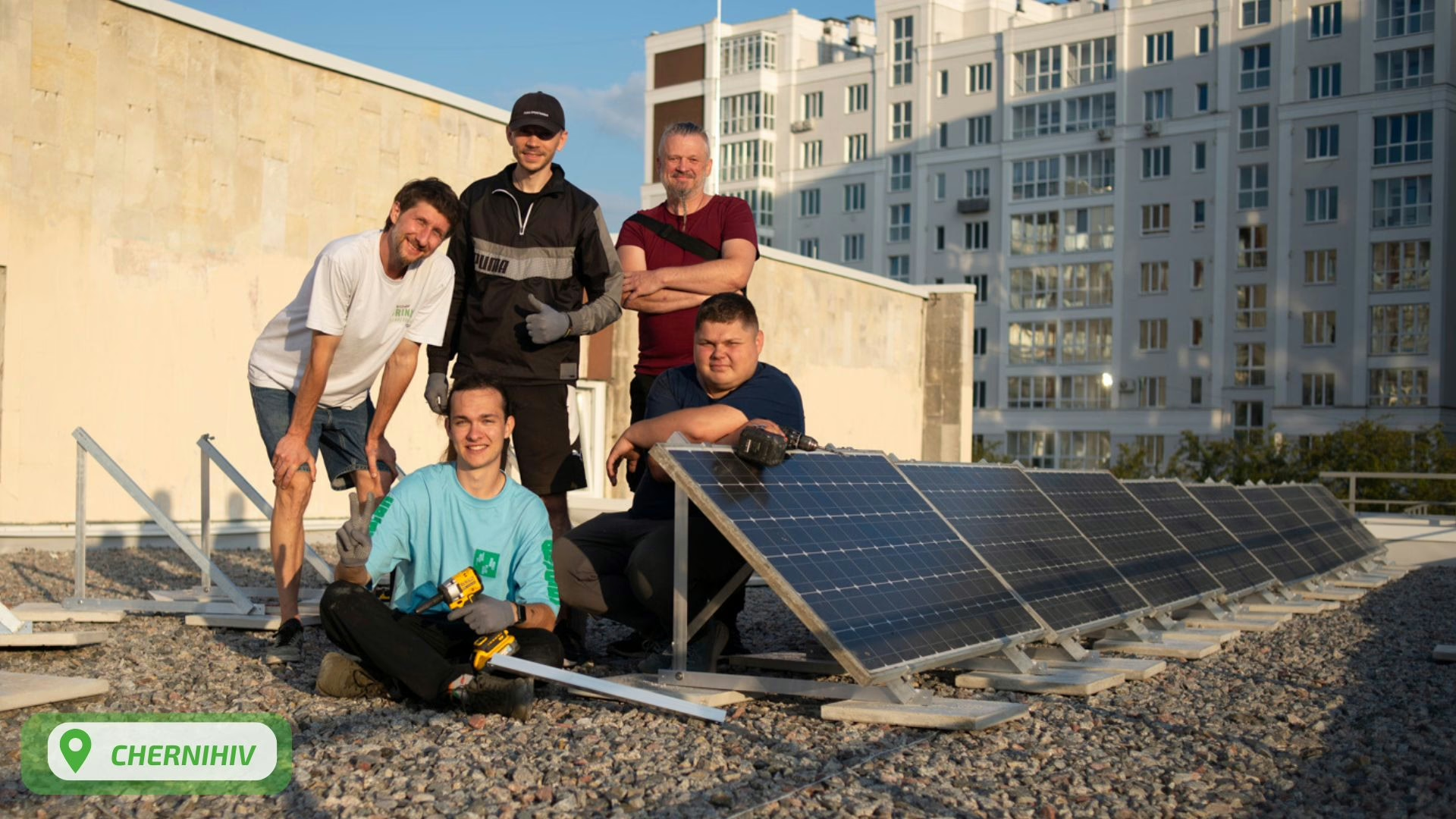
In Chernihiv, the city received solar panels from a Czech donor and decide to install a power plant on the roof of the start-up center. It not only provides energy during power outages, but also serves as an educational tool: students, volunteers, and war veterans participated in its installation and gained practical experience working with renewable energy.
The second example is children’s hospital in Zaporizhia. A recently installed solar power plant ensures that thousands of young patients receive vital care even during power outages. Today, solar energy is truly saving lives in Ukraine.
How help becomes energy
— What specific energy initiatives are you currently supporting in Ukraine? Why these in particular?
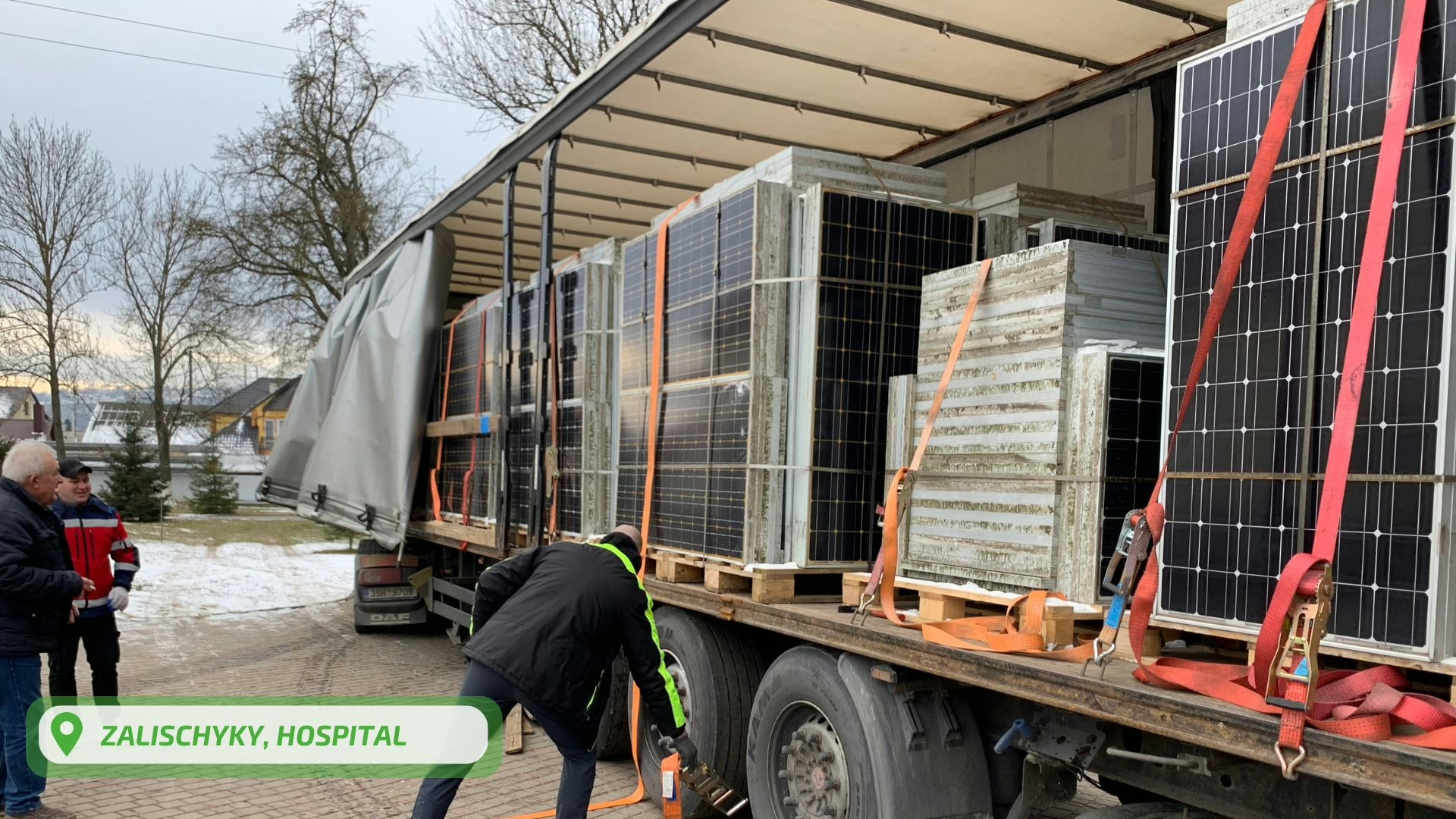
Pavla: We are currently directly supporting the Sun for Ukraine project, which provides hospitals with solar power plants. This allows medical facilities to continue operating even during power outages, and at the same time reduces their dependence on fossil fuels.
In addition, we cooperate with organizations in regions such as Kherson, where daily life is very difficult due to constant threat. There, a local organization runs a community center, as despite daily russian attacks, active citizens gather there to monitor government spending on the region’s recovery. This resilience and active stance of the people is extremely inspiring to us.
— Why is it important not only to rebuild what has been destroyed, but also to make the system more resilient for the future?
Alžbeta: It is very important for Ukraine to have a reliable and sustainable energy system. Developing renewable energy projects across the country not only helps to counter russian aggression, but also provides an opportunity to set an example in the fight on climate change.
Partnerships that move communities forward
— Do you like work with Ukrainian communities and partners?
Pavla: Overall, it has been a very positive experience. Our partners are usually punctual, reliable, and responsible. Of course, cooperation with individual communities can be challenging, but this is the exception rather than the rule.
— What have you learned from working with Ukrainians?
Pavla: So many things! I realized that we need to work more actively in cities where there is a shortage of electricity and heating. A terrible tragedy like war has created opportunities for positive and even revolutionary changes. The energy sector in Ukraine — where solar panels are being installed on municipal buildings on a scale we could not have even dreamed of before — is the best proof of this.
Difficulties are part of the journey
— What was the most difficult aspect in the cooperation — logistics, bureaucracy, or the war?
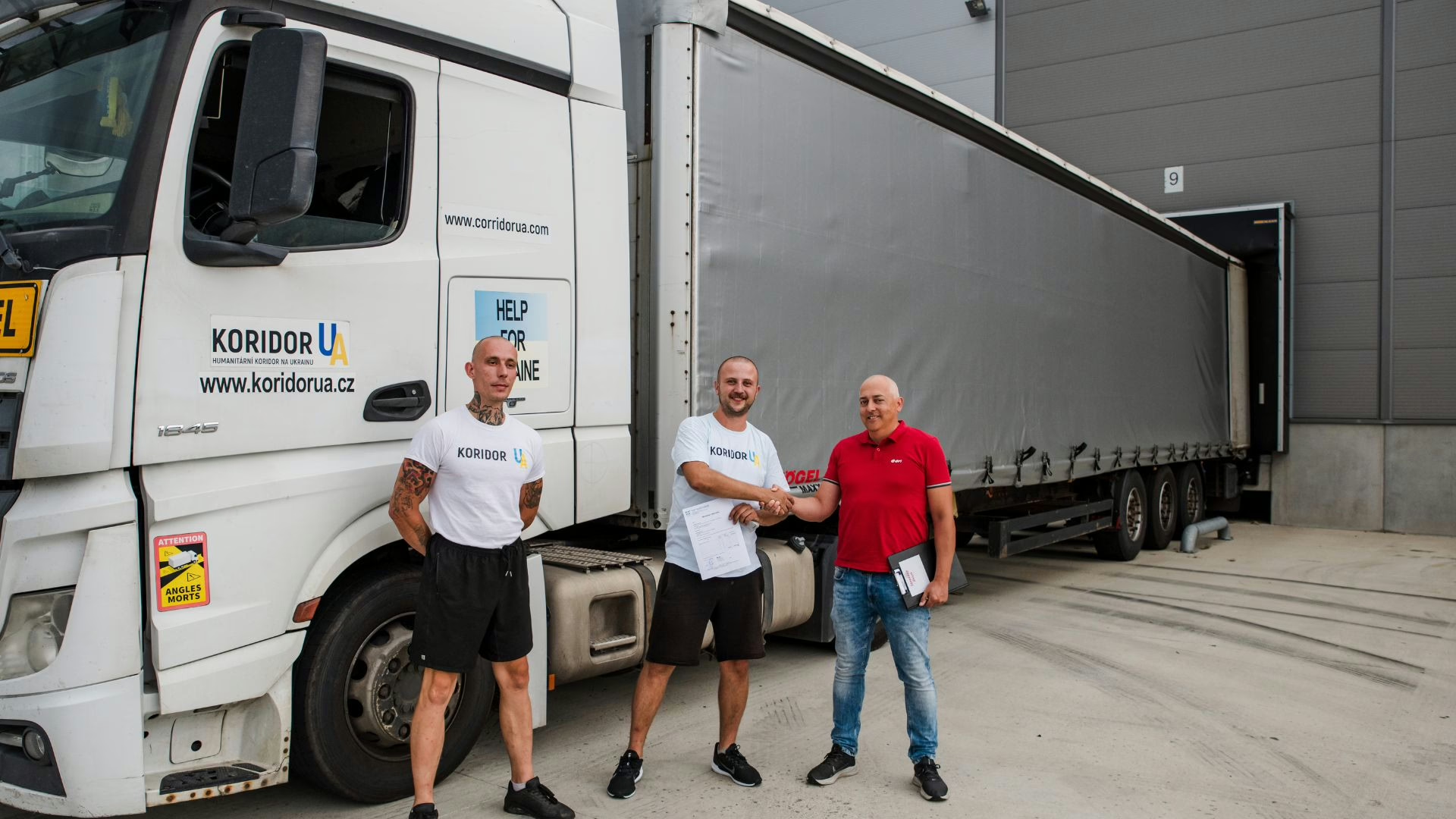
Alžběta: From a fundraising perspective, one of the most difficult aspects is establishing contacts with companies that can donate materials. We are very grateful to the Czech Solar Association for its ongoing support: it helps us establish connections with solar panel manufacturers, component suppliers, and other interested parties.
However, personal relationships with companies in the renewable energy sector are not as easy to establish as they may seem. It takes time to build trust and long-term partnerships. Fortunately, our experience of working with those who supported Sun for Ukraine has been overwhelmingly positive.
— Does Czech society support these initiatives? How do people react to your work in Ukraine?
Alžběta: We interact with Czech communities mainly through social media and receive strong support from them. It is true that people are less inclined to donate now than they were at the beginning of the war. But despite this, there is still a loyal group of people who actively support Ukraine in various ways.
Ukraine, powering Europe
— How do you see Ukraine in 5–10 years in terms of the energy sector?
Alžbeta: It is difficult to predict at this stage, but I firmly believe that Ukraine’s energy sector will become more independent, sustainable, and decentralized thanks to the use of the enormous potential of solar energy.
— What will help Ukrainians recover faster and become energy independent?
Alžbeta: Investments by major international companies, as well as businesses and organizations with commercial and humanitarian intentions, will play a key role. According to our observations, Ukrainian municipalities are already actively pursuing energy independence.
— Why do you think this cooperation is important not only for Ukraine, but also for Europe as a whole?
Alžbeta: Energy security is a common challenge for all of Europe. Ukraine’s efforts to build a decentralized and sustainable system, especially during wartime, not only strengthen its own security but also provide lessons and inspiration for the rest of Europe. Solving these problems together makes us all stronger.
“We want you to know: you are not alone.”
— What would you like to say to Ukrainians who use the infrastructure that you are helping to rebuild?
Alžbeta: We are happy to support you, especially during power outages. I believe that the time will soon come when you, the people of Ukraine, will be able to live independent and safe lifes in freedom.
— What would you like Ukrainians to know about your organization and the Czech people in general?
Alžběta: NESEHNUTÍ initiatives are just one of many in the Czech Republic. Thousands of people here are finding their own ways to support Ukraine. We want you to know that you are not alone in this struggle — countless Czechs stand with you, offering support, solidarity, and hope.
As the Ecoclub team, we sincerely appreciate our cooperation with NESEHNUTÍ. This partnership has become an example of reliable, honest, and humane interaction for us.
The support of our Czech colleagues — from the first days of the full-scale invasion to the present day — has helped us implement solutions that strengthen the resilience of Ukrainian communities and save lives in hospitals during power outages.
We are grateful to the NESEHNUTÍ team for their trust, shared values, and constant readiness to be there when people and communities need them. This partnership proves that professionalism and mutual solidarity can create change that goes far beyond just projects.