












Restoration of infrastructure, construction of new facilities, and development of the industrial and energy sectors must account for their impact on the environment, public health, and the long-term needs of communities. An environmental impact assessment is a procedure that gives communities a real voice in decision-making regarding new construction and regional development. However, to make use of this voice, one needs to know how the system functions.
This spring, Ecoclub organised a series of webinars titles ‘EIA: the role of local authorities and the public’ – four sessions featuring five experts, with over 200 attendees from various regions of Ukraine. Among them were local councillors, activists, organisation representatives, and interested community members – everyone for whom it is important to understand how environmental tools are applied.
Discussion focused on mechanisms of public participation in EIA, gender aspects of environmental governance, and the importance of this knowledge during the reconstruction process. Specific case studies were also examined – how these principles are already being applied and areas where improvements are still needed.
We emphasised that the EIA procedure is mandatory for European union countries and is a key component of EU environmental policy. For Ukraine, its proper implementation is also of great importance in the context of European integration and the alignment of national practices with European standards.
Recordings of the webinars are available here – in case you missed them or would like to revisit the content. Here is a summary of the key points raised by experts during the events.
Summary of the first webinar: ‘EIA and communities: what you need to know’
Environmental Impact Assessment (EIA) is not a mere formality, but a practical tool that anyone can use. The public, local authorities and residents have the right to submit written comments and participate in public hearings at two key stages: during discussions on the scope of the study for the future report and during discussions on the report itself. The more people get involved, the more likely it is that their views will be taken into account.
All documents regarding specific projects can be found in the single EIA register on the ‘Ecosystema’ platform. There, you can see what stage the procedure is at, which documents have already been published, and when public hearings are being held. If documents are uploaded late or are incomplete, this constitutes a breach of procedure and grounds for an appeal.
Common violations to look out for include: the absence of well-founded alternatives in the report, failure to address public comments without explanation, and vague environmental conditions in the conclusion. Even after a positive conclusion is issued, the procedure is not over: compliance with the stipulated conditions can and should be monitored, and decisions can be challenged in court if violations occur.
«The EIA procedure is a tool that allows communities to influence decisions that may affect their environment, people’s health and lives,» – Yuliia Kvitka, PhD in Economics, Senior Project Manager for Climate and Energy at WWF-Ukraine, member of the NGO ‘Ecoclub’ and speaker at the first webinar.
«The more proactively the public participates in the procedure, the better the quality of decisions and the greater the accountability of all participants in the process,» – Yuriy Zadorozhniy, expert on socio-political issues at the NGO ‘Ecoclub’.
View the first webinar recording here.
Summary of the second webinar: ‘EIA in practice: how to avoid environmentally and socio-economically harmful decisions’
One of the key lessons from the second webinar is that the public often becomes involved in the EIA process too late, when businesses have already invested funds, secured land plots, carried out preparatory work and gained political support. In such a situation, rejection becomes almost impossible. It is therefore more effective to act earlier — at the stage of land allocation, approval by the ministry or during the strategic environmental assessment, even before the EIA procedure has begun.
EIA reports typically suffer from the same issues: biological surveys are carried out superficially or not at all; endangered species are ‘not found’ in the relevant areas; information unfavourable to the client is omitted; and alternatives are presented in such a way that they can be rejected outright. All of this provides grounds for comments and appeals. Moreover, the public may submit comments without having to provide justification, and any additional sources and data confirming the risks are taken into account when preparing a decision.
Even after a positive conclusion is reached, the work does not end there — it is important to monitor compliance with environmental conditions. In practice, due to the suspension of inspections, many conditions are simply ignored. Effective monitoring tools include analysing public registers, satellite imagery, appeals to local authorities, and international certification, which requires compliance with environmental standards.
The EIA is not a mechanism for halting projects, but a tool for improving them. There are positive examples where, thanks to the procedure, it was possible to find a compromise between the community and business, preserve valuable land plots, or change the technology used. But this only works when the public is involved at the right time and puts forward specific, well-reasoned demands, rather than simply a general request to ban everything.
«There are also many positive examples. And where EIA is implemented at the initial stages – that is when it will work,» says Petro Testov, head of the expert department at the Ukrainian Nature Conservation Group (UNCG) and an analyst.
A prime example is the story of how the conflict over forest use was resolved. Thanks to the EIA procedure, it was possible to move from clear-cutting to selective cutting, which significantly reduced the environmental impact whilst taking into account the economic interests of forest users. Although neither side had all their demands fully met, a compromise solution was found that significantly improved the situation.
The webinar concluded with the view that environmental impact assessment works best when it is perceived not as a formality or a tool for confrontation, but as a mechanism for finding balanced solutions capable of taking into account the interests of the community, business and the environment simultaneously.
View the second webinar recording here.
Summary of the third webinar: “The gender approach in local self-government: practical tools for communities”
The gender approach in local self-government is not about a separate budget for women, nor is it about merely meeting quotas. It is about understanding that the same project affects different people in different ways — depending on gender, age, whether they have children, disability, and income levels. If this is not taken into account at the planning stage, decisions will be incomplete even when all formal requirements have been met.
In practice, this means taking specific steps: scheduling public hearings at times that allow women with children to physically attend; ensuring that venues are accessible to people with disabilities; and asking why certain groups are less likely to visit the park or participate in discussions. Among the tools available are gender analysis, gender audits, gender-responsive budgeting, and a community gender profile. All these essentially answer one question: who is involved in decision-making, who has access to resources, and what conditions have been created to facilitate this.
This issue was particularly relevant in the context of post-war reconstruction. Ukrainian communities are already making decisions today that will shape people’s quality of life for decades to come. The well-being of residents depends not only on how comfortable, safe and accessible the rebuilt areas will be, but also on whether people will want to continue living in their communities.
The most common myth about the gender approach is that it is not relevant, especially now. But it is precisely now, as communities rebuild and plan for their future, that the foundations are being laid for approaches that will determine the quality of this reconstruction for years to come. If decisions are made without taking different population groups into account, there is a risk that the reconstruction will reproduce the very same inequalities that existed before the war.
«Are gender-based approaches not relevant at this time? I believe that is completely wrong. If we want the reconstruction to be fair and inclusive, we need to start working towards it right now. We need to create conditions in which people would want to stay and live in Ukraine,» emphasised Halyna Kotliuk, coordinator of the Gender Democracy programme at the Heinrich Böll Foundation in Ukraine.
View the third webinar recording here.
The final fourth webinar: “The role and tendencies of EIA in the future reconstruction of Ukraine”
The cost of rebuilding Ukraine is estimated at no less than $588 billion, and this figure is rising every year. A key guideline for planning is the RDNA (Rapid Damage and Needs Assessment) methodology, jointly developed by the World Bank, the EU, and the UN. It assesses not only physically damaged infrastructure but also lost income, services, and community opportunities. Importantly, the principle of ‘building back better’ is already embedded at the RDNA level — any reconstruction must involve modernisation, compliance with EU environmental standards and climate transformation, rather than simply restoring what was there before.
The main mechanism for financial support for local communities today is the Ukraine Facility — 50 billion euros over three years, recently expanded by a further 30 billion. The terms and conditions of this mechanism explicitly state that projects must comply with EU environmental standards and the DNSH principle — ‘do no significant harm’. This means that no funding through the European Bank for Reconstruction and Development, or the European Investment Bank will be allocated to projects that have not undergone a thorough environmental assessment. This also applies to the World Bank, which requires an EIA even in cases where Ukrainian legislation, due to martial law, permits it not to be carried out.
«There will certainly not be enough money in Ukraine to cover all reconstruction needs. A community’s competitiveness will depend on its ability to meet donors’ requirements. If a community is able to carry out a high-quality environmental assessment, the project will be more competitive and the donor will be keen to implement it,» emphasised Yaroslav Teleshun, PhD in Political Science and Head of Policy and Advocacy at WWF-Ukraine.
Practical takeaway for communities: EIA is no longer just a formal requirement, but a condition for accessing recovery funds. If a community implements a project in breach of environmental standards, it risks not only its reputation but also having to repay donors in full. Conversely, communities that have learned to conduct environmental assessments effectively will be more competitive when it comes to the allocation of reconstruction funding.
View the fourth webinar recording here.
On the results
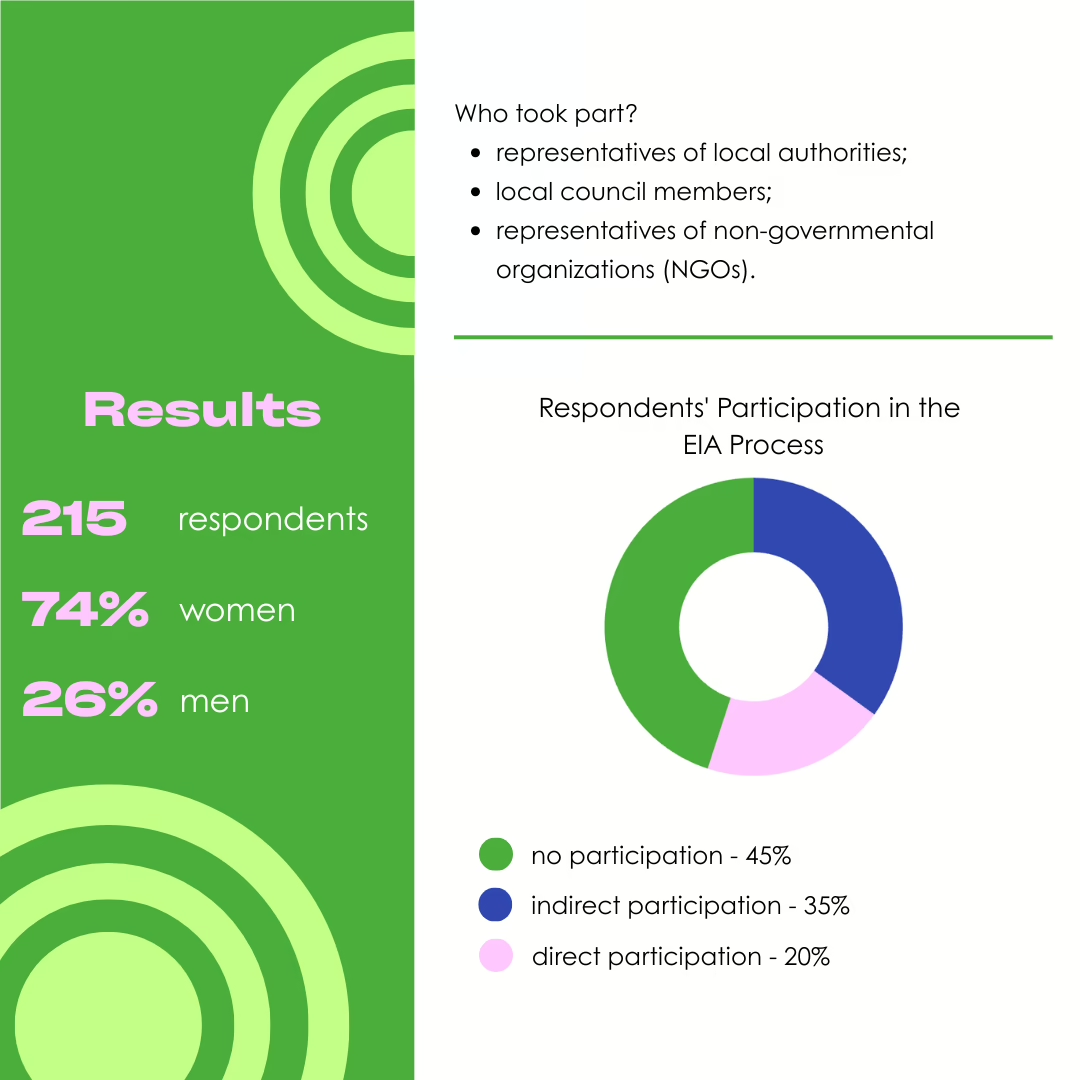
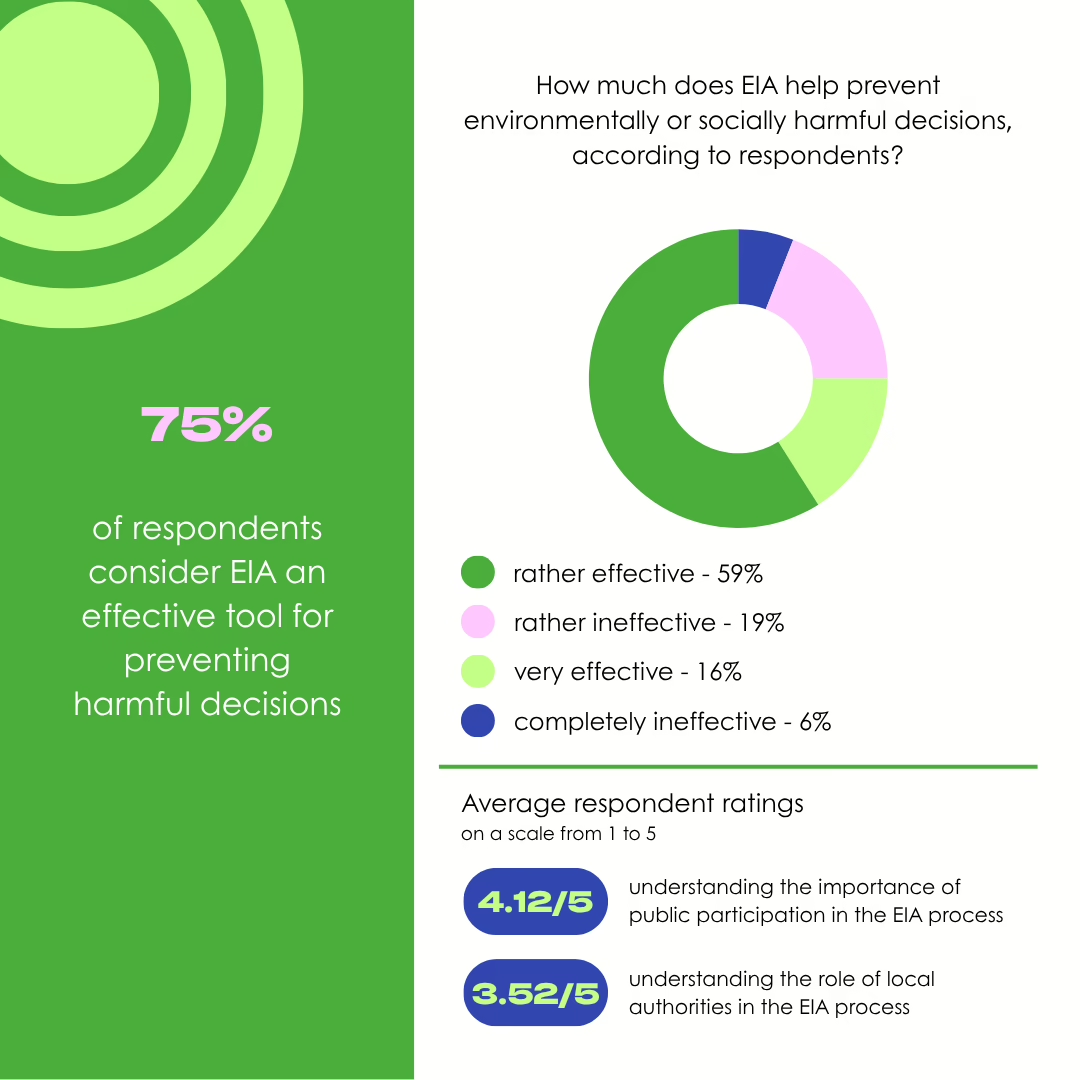
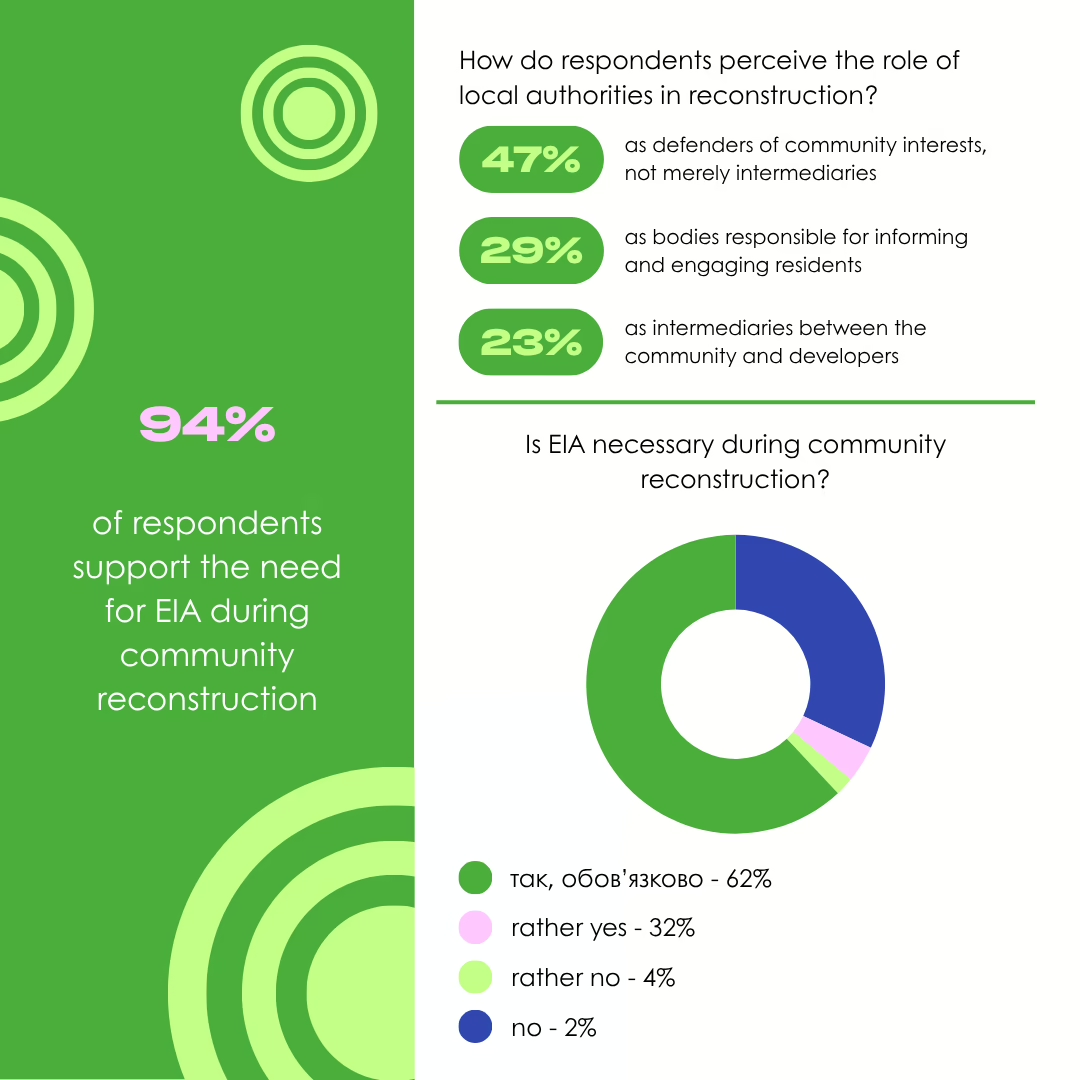
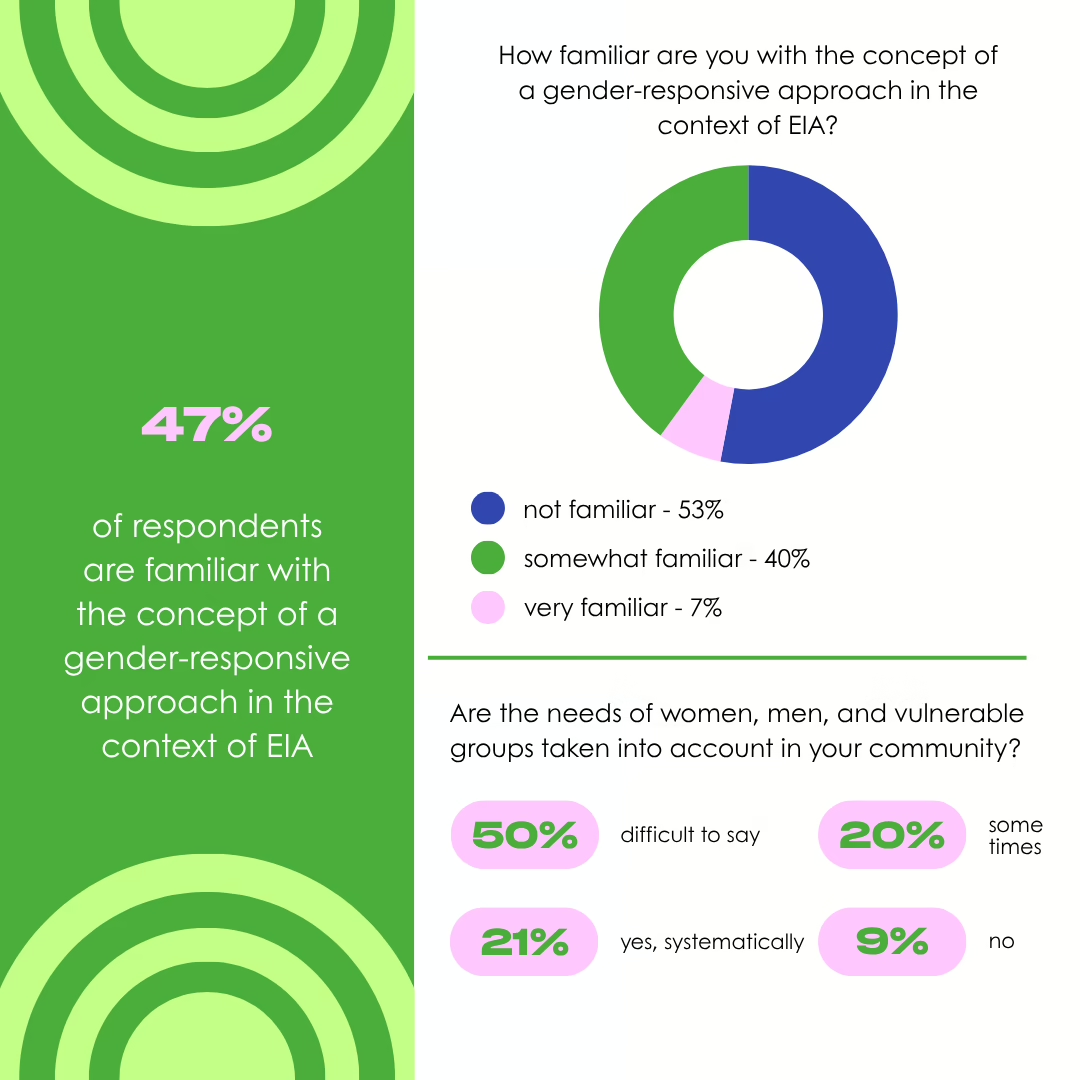
Throughout the series, we surveyed participants on their understanding of the EIA, its gender dimension, and the role of this tool in reconstruction. Over 70% attended most or all four webinars.
The most telling result is the increase in knowledge levels. Before the series began, participants rated their understanding of the EIA procedure at an average of 3.21 out of 5; after completion, it was 4.24. The survey showed that 86% believe their understanding of the gender approach has improved significantly or to some extent. The same proportion – 86% – plan to apply the knowledge gained in their work or community activities.
This confirms a simple fact: communities want to understand how the EIA procedure works and are ready to participate in it — provided there is accessible and practical training. In the context of reconstruction, where environmental assessment is becoming a condition for access to donor funding, such skills are not merely useful, but essential.
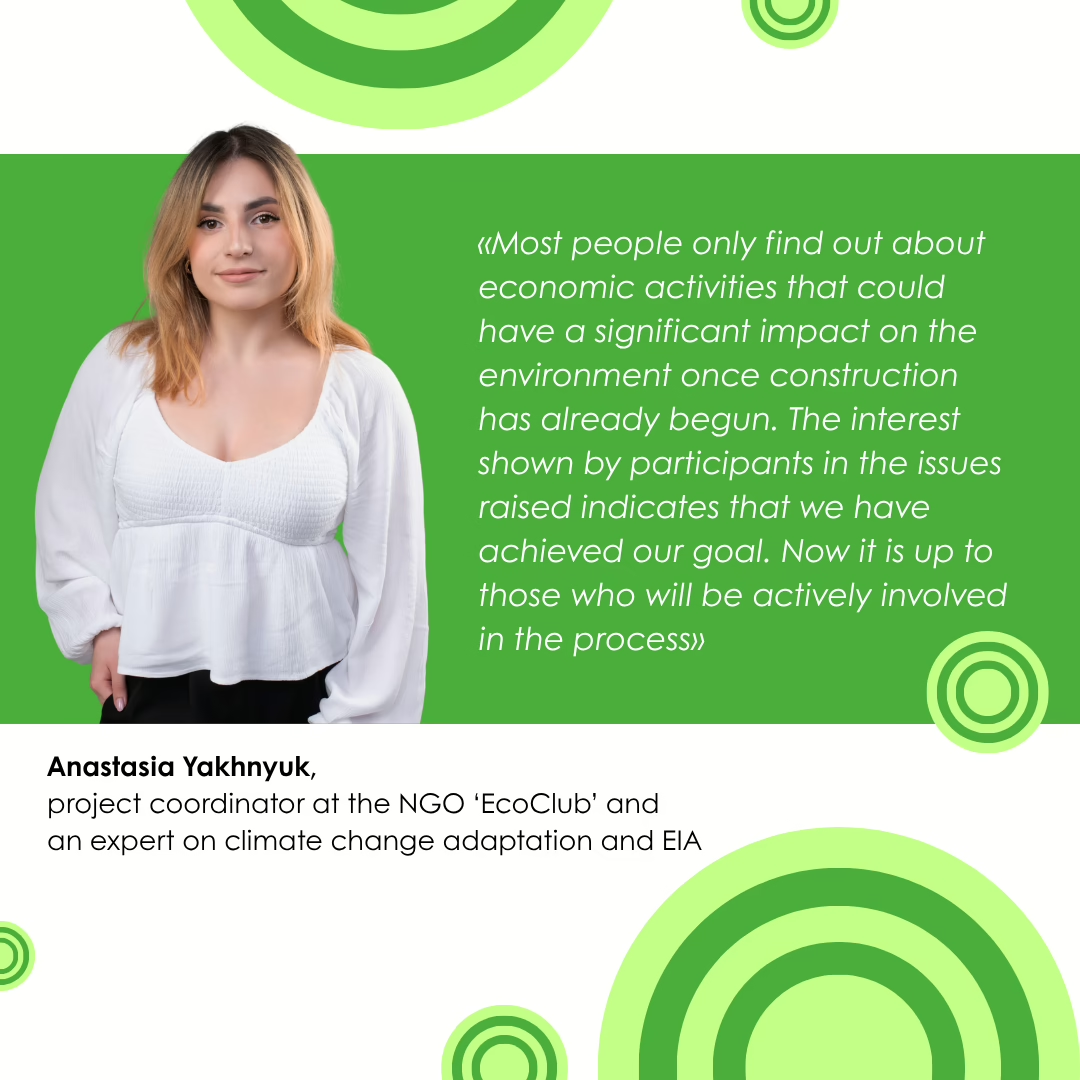
«Most people only find out about economic activities that could have a significant impact on the environment once construction has already begun. The interest shown by participants in the issues raised indicates that we have achieved our goal. Now it is up to those who will be actively involved in the process,» said Anastasia Yakhnyuk, project coordinator at the NGO ‘EcoClub’ and an expert on climate change adaptation and EIA.
This publication is funded by the European Union. Its contents are the sole responsibility of the authors and do not necessarily reflect the views of the European Union.