












Volodymyr community is gradually moving from standalone energy-efficient solutions to systemic development planning. It began with replacing windows and doors in schools and kindergartens; today the community is preparing major thermal modernisation projects, installing solar panels, and working on strategic documents intended to guide its development for decades to come.
For the community, energy efficiency is first and foremost about resident comfort, the stable operation of vital facilities, the community’s ability to progressively become more energy-independent – and, of course, cost reduction.
Volodymyr community was established in 2020 following the merger of the city of Volodymyr and surrounding villages. It has a population of over 42,000 people.
Hanna Rubanova – Head of the Capital Construction Division of the Infrastructure Department of Volodymyr City Council, who also serves as the community’s acting energy manager – shares how the community implements energy-efficient solutions, works with international partners, and is only beginning to tackle climate adaptation systematically.
How the Community Began Working on Energy Efficiency
Volodymyr began actively pursuing energy efficiency back in 2016. The primary objective at the time was to reduce heat loss in public institutions and cut energy expenditure.
Initial efforts centred on basic solutions: replacing windows and doors, along with selective repairs. Later the community moved to more comprehensive upgrades – insulating buildings, overhauling heating networks, renovating boiler houses, and converting some of them to solid fuel.
Whenever energy costs come down, the community finds more room to invest in other residents’ needs – and this is how they frame it.
Why the Community Began Working on Strategic Documents
One of the community’s first major international cooperation projects was “Clean Water,” which enabled the reconstruction of the central water intake and the construction of a new water supply line. Following that, the community began more actively pursuing international partnerships and new development opportunities.
In 2017, Volodymyr joined the Covenant of Mayors – East initiative and, just a year later, developed its Sustainable Energy and Climate Action Plan (SECAP). That was the first time the community systematically identified which buildings required priority upgrades and how to reduce energy consumption.
The community is now updating that document to cover its entire territory, while simultaneously working on a local energy plan and a development strategy. There is also a green recovery plan developed together with international partners.
“It is important to us that these documents do more than sit on a shelf. They must help us understand where the community is losing the most resources, which facilities need to be modernised first, and where to look for funding,” explains Hanna Rubanova.
How Energy Monitoring Works
A fully-fledged energy management system is not yet in place, but energy monitoring is already up and running. Facilities collect energy consumption data and analyse where the highest costs arise.
At the moment, this area is handled by one person on top of their other responsibilities. The community acknowledges that systemic work requires a dedicated specialist – or even a dedicated department.
Priority goes to facilities with the greatest energy losses or the most urgent need for modernisation. This is how priorities for future projects are determined.
Energy Efficiency Projects Already Under Way
In 2026–2027, the community plans to implement two major infrastructure projects: a comprehensive thermal modernisation of a medical facility and the installation of a solar power plant at the water utility. In parallel, it continues to insulate buildings, install individual heating substations, and modernise educational facilities. Solar panels are already operating at a number of schools, with plans to install them at kindergartens as well.
With the budget limited, international support plays a vital role. Through partners, the community has already installed heat pumps at the local swimming pool and received solar panels for schools, generators, and other equipment.
How the Community Is Beginning to Address Climate Adaptation
The community acknowledges that climate change adaptation is only just entering local planning. Previously, the emphasis was placed on energy efficiency and infrastructure projects. At the same time, the community recognises that climate change is already affecting everyday life, and so these issues are gradually being integrated into its work.
First steps have already been taken: reconstruction of parks and public gardens, greening of urban areas, and renewal of public spaces. Looking ahead, the community plans to develop a dedicated climate adaptation action plan – one that will help identify the most pressing challenges and determine which solutions to prioritise for a more systematic approach.
Working with Condominiums (OSBBs) and Residents
Volodymyr makes clear that energy efficiency cannot be limited to public institutions alone. The community therefore works to involve condominiums, residents, and businesses in the process. For condominiums, co-financing programmes are already available for repairs to roofs, lifts, shelters, and other shared building elements. The “Warm Home” (Tepla Oselya) programme is also active, reimbursing interest on loans for participants in the state “Enerhodim” programme.
Beyond financial support, the community holds regular meetings with residents to explain how the programmes work and how people can get involved in energy-efficient solutions.
“It is important to us that people see energy efficiency as what it truly is: concrete changes in their buildings that improve comfort and help reduce costs,” says Hanna Rubanova.
Why the Hardest Part Is Changing People’s Attitudes
One of the biggest challenges the community identifies is working with people and changing their approach to energy consumption. Facilities, for instance, are required to regularly collect energy consumption data. For staff, this often feels like an additional burden, which is why it is important to explain why it matters and how it helps quickly flag problems – heat loss, overconsumption, or faulty equipment. Difficulties also arise in decision-making.
The community explains that energy efficiency does not always produce quick, visible results. This is precisely why concrete examples, documented savings figures, and a clear impact for residents are so important for securing support for such projects.
Advice for Other Communities
Volodymyr community advises others not to hold out for ideal conditions, but to start with whatever is already possible.
“A large budget or a fully prepared team is not always available from the outset – but that is no reason to put off change,” says Hanna Rubanova.
First steps can be fairly simple: analysing energy consumption, studying the experience of other communities, applying for grant programmes, and building partnerships. All of this helps a community understand its needs and work toward larger projects.
Training is particularly stressed, as many communities lack specialists in energy efficiency and strategic planning.
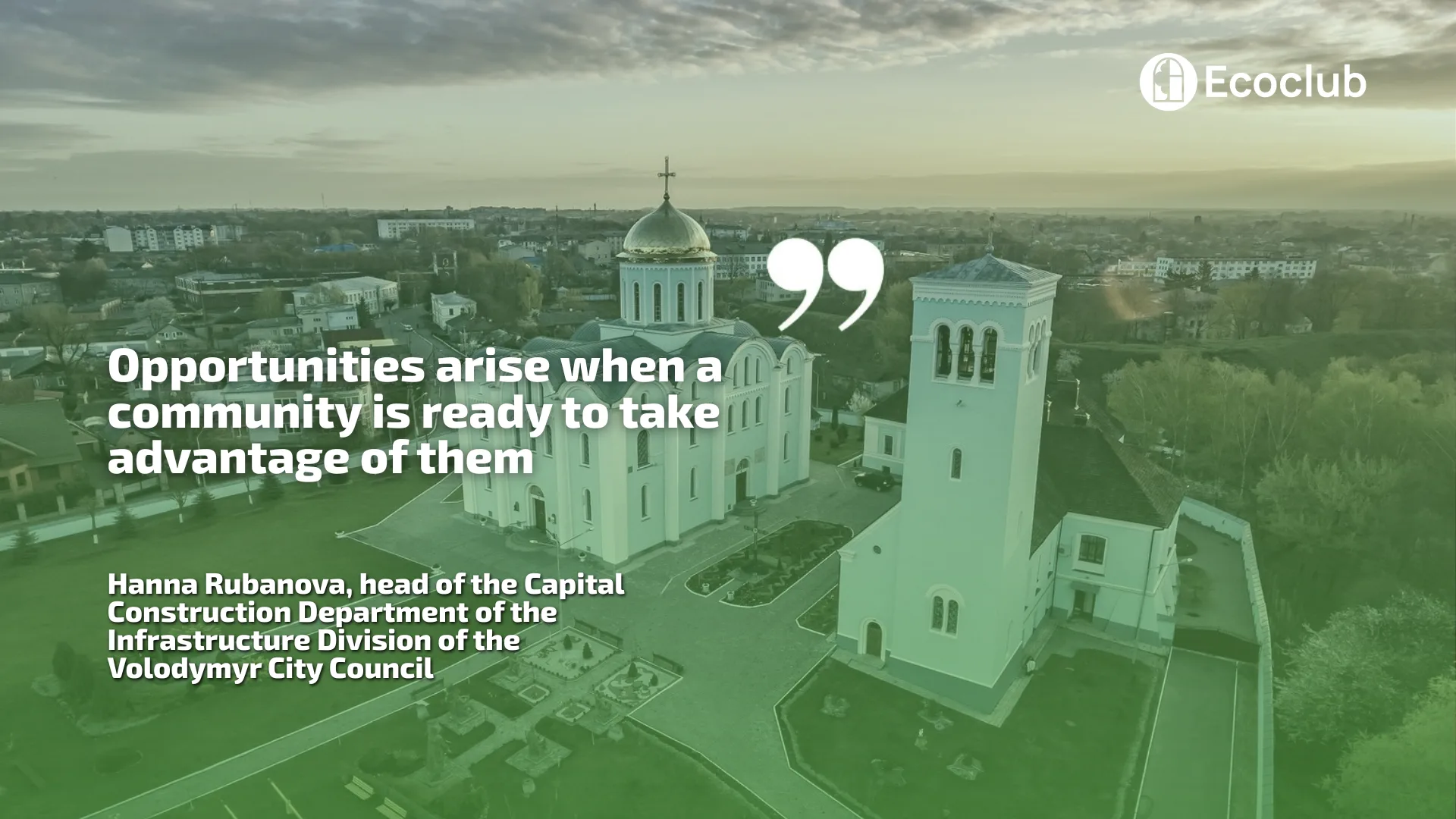
“Opportunities come to communities that are ready for them. One unsupported project does not mean the next one will not succeed,” she concludes.